Tag Archive: multiplayer


The more things change, the more they stay the same

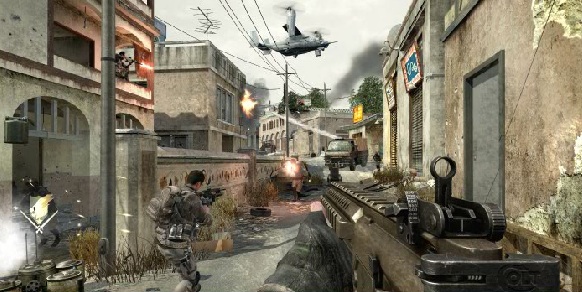
At this point, everyone has seen the trailer or at least gotten the cliffnotes to everything announced at the Call of Duty: Ghosts multiplayer press conference. If you haven’t though, be sure to Chris’ write-up on all the new multiplayer details.

For the rest of you, though, you probably want to know how a lot of these announcements actually affect the gameplay. Well, we’ve got you covered. I was able to sit down with Ghosts’ multiplayer for about 90 minutes and put the new modes and maps through their paces.

Let’s start with the new modes. Two of seven new modes being added to the game were shown to us, and the first one I saw was Cranked. In this twist on Team Deathmatch, players who get a kill are given a speed boost as reward. The speed boost lasts for 30 seconds, but if you don’t kill anyone else in that time, your character literally explodes. Talk about messing with your K/D ratio.

After playing several matches, I realized a couple of things. The speed boost doesn’t stack, so there are only two speeds—normal and fast—and if you explode, there’s no splash damage that can hurt opponents. So anyone thinking that a suicide bomber strategy might help win the match or salvage that K/D, think again.

Also, 30 seconds is a lot more time than you might think. I saw a lot of people who started running around like a chicken with their heads cut off when their timer began and got mowed down by enemy fire before they even came close to running out of time. Panicking doesn’t help you or your team.

After Cranked, we got to try out Search & Rescue. This is a twist on Search & Destroy and Kill Confirmed–style matches. Kill an opponent, then collect their dog tags to remove them from the match altogether. If an ally grabs the dog tags first, the person will respawn. Since I love both of these modes, I had a lot more fun with Search & Rescue than Cranked. Just like classic Search & Destroy, you don’t have to eliminate the entire enemy team if you are on the offensive, since there are also two points where you can plant a bomb.

Honestly, the modes may be described as “new,” but neither reinvent the wheel. All we’re seeing is some unique little twists being added to classic modes, or modes being combined and passed off as something revolutionary. But, I can’t deny that these modes, especially Search & Rescue, we’re a lot of fun to play.

Aside from these new modes, we also played Domination a couple of times, which remains the same as ever.

We also got to play on three brand new maps: Strikezone, Whiteout, and Octane.

Octane is a medium-sized map based around an abandoned gas station and a western ghost town. As demonstrated in the trailer, this map featured destructible walls and structures. Players can blow apart the supports to the gas station roof, causing it to collapse into new cover, or crush players underneath. While I didn’t see anyone stupid enough to get squished, the few times we did level the station it definitely caused a huge shift in strategy. Terrain morphed and closed off some old paths, while new ones opened up. When we played Cranked on Octane, the disorientation proved deadly—a few players found themselves lined up in enemy crosshairs after not being able to find a way through the rubble.

The next map was Whiteout, and was easily my favorite of the event. It was a massive, open map that afforded players plenty of sniper perches in abandoned vacation cabins, as well as cover through twisting, ice-covered caves. While playing on this map though, I admit to having flashbacks to the White Pass map from Battlefield: Bad Company 2. While the attention to detail here was much higher (as I would hope with next-gen on the horizon), the feeling of sniping from a second floor window overwhelmed my nostalgia factor at times as we played Search & Rescue.

The final map was Strikezone. Easily my least favorite, this was probably the smallest map I can remember in recent history. It seemed comparable in size to Hijacked from Black Ops II, but with even less cover and a square layout overall instead of Hijacked’s elongated corridors.  There is nothing more frustrating than spawning in maps like these, since—with everyone running around in such a confined space—you’ll often pop up right next to an enemy and be dead again before getting your bearings. It also had very little going on in it. While the idea of a firefight breaking out in a stadium hot dog stand sounded fun, it turned out to be anything but.

After exhausting the modes, I attempted to go in-depth with the customization, but we were on an unforgiving rotation that prevented me from truly messing around with the new point-value perk system (where some perks are worth more than others) or really mess with my character.  I was able to cycle through some pre-assigned camo options like arctic, desert, urban, and the classic jungle, and gave my soldier a badass helmet before being whisked into another match. But it was nice to see so many of Ghosts‘ new female character models on the maps. Ultimately, these customization options are more about personal tastes than anything else, since they don’t change things like movement speed or health. It’s just another way of putting a personal stamp on your Call of Duty experience.

I also got to experience the new Field Orders feature, where a blue briefcase will randomly appear on the body of a felled enemy and provide you and your team a Care Package if you complete certain extra objectives, ranging from getting a kill while jumping to performing so many headshots. This was an interesting addition, but not one that most people I played with cared about. I’d often see the briefcase just sitting there, so lonely, waiting for a player to try their hand at its challenge. But no one ever bothered, because there’s so much else going on in a multiplayer match to worry about.

At the end of the day, the new modes and maps were nice, but it’s still the core Call of Duty experience that millions of people have come to love. There was little here to make me think that what we’ve grown accustomed to over the years, besides the next-gen prettiness of it all, will be getting a massive change. Some of the things announced at the press conference, like Clans, weren’t available to me when I wanted to check them out, but the idea of making clan tags more official and rewarding players as a group for doing well on top of individually has a lot of potential.

Overall, if you love Call of Duty, I don’t see anything here that will turn you off to Ghosts. On the other hand, if you’re looking for a true game-changer, what I saw suggests that you’ll probably have to keep looking.

As much as Black Ops 2 looks to ensure that the single player campaign isn’t just lost in the shuffle, it’s not like Treyarch has completely forgotten about multiplayer, either. By taking advantage of the new 2025 setting and completely overhauled killstreak and create-a-class systems, Black Ops 2 is looking to give Call of Duty fans the most intense yet streamlined multiplayer experience yet, as we saw during our hands-on preview

The most striking difference was the overhauled create-a-class system, which boasts some big, readily apparent changes. Not only does the interace look completely different, the feature now acts similarly to an RPG inventory. Whereas previous games in the franchise presented you with a rigid set of inventory options, Black Ops 2‘s system is much more flexible, allowing you to assign weapons, perks, and equipment to fill up the slots you’re allotted in any way you see fit.

As game design director David Vonderhaar explains, this new system—dubbed “Big 10” internally—will work to provide players with a truly customizable experience. “You can take any ten pieces of content in the system—and this is the key differential between all create a classes before and the one in Black Ops 2. In Black Ops 1, you had to take content. You had a secondary weapon. You had a tactical grenade. You had those things whether you cared for them or didn’t care for them, whether you used them or you didn’t use them, but in the create-a-class for Black Ops 2 you don’t have to take those things. You can straight up not take a secondary weapon if you’re never going to switch to it, and then use that freely allocated point and put it somewhere else. That could be an attachment. That could be an extra perk. That could be a second lethal grenade. That’s the core of the system. That’s the difference, the key pivotal difference between this and the systems that have come before.”

David also pointed out that you’ll need to get to Level 4 in Black Ops 2 before you can unlock the create-a-class. With 55 levels and 10 levels of prestige, you’ll need to prestige at least once before you can unlock all possibilities this time around. In the hopes of us playing around with it some, though, everything was unlocked for us from the start, and I was immediately able to appreciate the changes.

I dropped my secondary weapon—admittedly, I rarely stay alive long enough to need it—and second lethal grenade, affording me two points to play around with. I then made sure my tactical grenade was what would become the bane of riot shield users (now referred to as an “assault shield,” as much like Gears of War 2‘s Boomshield, you can plant it in the ground and use it as makeshift cover), my electro-dart. Basically, this handy little device would temporarily paralyze anyone who walks by it with a mildly damaging electric shock. Of course, whoever was unfortunate to walk past it and start twitching violently didn’t need to worry about the pitiful damage, as I was more than happy to finish them off with whatever assault rifle I was messing around with.

These extra two points though I took and equipped a second top-tier perk, as David explained to us the concept of create-a-class “wild cards.”

“Wild cards are an entirely new type of create-a-class content. What makes these wild cards special is they allow you to break the rules of the traditional system. So, by allocating one of your points on a wild card, you can do things like take a third attachment for your gun, take a second Perk 1, take a second lethal, take two primary weapons, or add additional attachments to your secondary weapon. It’s wild cards that really open up the create-a-class possibilities, and there’s an intrinsic cost. They cost one of your ten. You can break those rules, but it will cost you. So, wild cards are the rule breakers.”

To be of any effect though, the wild card cost me my two open points—one to unlock the card and one to actually equip the extra perk. It would be worth it, though, as I really only needed the one weapon and its attachments.

And speaking of attachments, this is where things got really wild. I could barely wrap my head around how many different goodies I could strap onto my assault rifle. Some are your first-person shooter staples, like laser sights and what not, and others have been heavily influenced by the 2025 setting, like the millimeter scanner, which could well be the greatest anti-camping tool conceived. By equipping the scanner, you’ll actually be able to see through walls to find players who are standing still and allow you to eliminate them before they cause any real havoc. But, as David was quick to point out, the idea of gun attachments have been taken to a new level as well.

“The laser sight increases accuracy, specifically hip-fire accuracy. Now, if you’re a Call of Duty player, you know that as Steady Aim, and you know that as a perk, but in Black Ops 2, there are no perks that modify a gun. If you want to modify a gun, you will take an attachment for that gun. That is the best way for us to allow you to have an experience with that gun that’s appropriate for that gun. Whereas a perk might modify all guns evenly, this allows us to, if we think that perk-like ability is inappropriate for that weapon, then that attachment’s not available for that weapon. It’s a very key pivot here, because I can also tune this laser sight specifically for the gun, so if it’s already a gun that hip-fires very accurately, this laser sight might modify it differently than something that would have to modify all weapons evenly. That gives us a really good opportunity to balance all these weapons, because there are so many guns and so many combinations of attachments. It’s a very important part of our strategy.”

So, I had my rifle, I had my gun, I had my perks, and I had my grenades. I was ready for combat! This was your more traditional Call of Duty experience: running around, trying to capture objectives and mow down your enemies as much as possible before they got to you in order to not only win the match, but also achieve killstreaks—now called score streaks—to help your cause as much as possible. But this was another aspect of the game that had been overhauled. Not only were there rewards that were unique to the 2025 setting, like the various robotic drones you could call upon and control to bring death to your enemies, but now there were added benefits to using rewards that helped your team, like the Call of Duty staple, the UAV.

“The UAV doesn’t get kills for you, but it still helps you win, and it helps your team win,” David explained. “Those are the only rewards that stack in, that actually give you score. So, a UAV is up and your teammates get kills, those are giving you +25 every time. +25 every time someone gets a kill while your UAV is up. Well, that assures I’ll make the enemy team shoot down UAVs, right? No longer something to just be ignored, and you’re not doing much except helping your team, which is helping your team win. So this strategy is super-important to us. We want to reward players who are helping their team win the game mode—not just the game, the game mode—and we want to reward players who are helping their team. There are lots of scoring events like this. The UAV is just an example of one. Anything that doesn’t directly generate kills for you but helps your team gives you a little bit of score. Not a lot. 25. Normally, one fourth of a kill.”

This also explained the name change, as acquiring points was what allowed you to unlock rewards and so heavily objective based players (like myself) could help out the team or capture objectives and see his score increase without ever firing a shot. We saw this some in Modern Warfare 3 with obtaining experience points like in Kill Confirmed mode by just picking up dog tags, but now we’ll see a more direct advantage to this within the game.

The effect is surprisingly noticeable. When I was carrying the flag in CTF, I saw my score multiplier double each time I got a kill. There was one match where I took down four guys who’d been unlucky enough to bunch up around my electro-dart (electro-dart for the win!) and got the point equivalent of 15 kills because of the multiplier that was added on for being the flag carrier.

Aside from the standard Team Deathmatch and CTF games, we also saw Hardpoint, the newest game mode added to the Call of Duty multiplayer repertoire. The best way to describe Hardpoint is that it plays exactly like Gears of War’s Annex mode. There is one point on the map worth a set number of points, and when those points run out, the hot spot moves to another section of the map. When one team captures enough points, they win the match.

When all was said and done, I was rather impressed with what I had seen of Black Ops 2’s multiplayer. The four levels we saw—Aftermath, Yemen, Cargo, and Turbine—were designed in the usual Call of Duty fashion to keep the action fast and frantic, and they all looked great graphically. The create-a-class really made me feel like I had a say in how I went into a fight and helped me perform better than I usually do because I could make my class conform more to my strategies. Last but not least, the new score system helped me feel like I had a fighting chance to help the team out with some rewards that are normally  just out of reach for me. From what I saw, it definitely looks like Treyarch is definitely upping the ante with Black Ops 2‘s multiplayer. I’ve got a hunch that Call of Duty fans will be very pleased come mid-November.

Originally Published: August 30, 2011, on EGMNOW.COM

I had a chance to sit down with Infinity Ward’s Creative Strategist Robert Bowling and talk a bit about the multiplayer strike packages for Call of Duty: Modern Warfare 3. To check out my full interview with Robert, head to EGMNOW.com or check out EGMi on the iPad and look for Issue 251.5. And for new trailers and more videos from me and the rest of the EGM crew, be sure to check out EGMNOW on Youtube! Multiplayer trailer footage provided by Activision.

Originally Published: August 30, 2011, on EGMNOW.COM

Call of Duty: Modern Warfare 3 creative strategist Robert Bowling faces one of his biggest challenges—revamping the series’ multiplayer offerings.
RC: One of the key aspects that’s made Call of Duty a smash hit is the multiplayer aspect, and you guys have pulled out all the stops in order to expand on this, including a new killstreak system where the player can choose either an Assault, Support, or Specialist path of upgrades. Tell us about the decision to incorporate specialized killstreaks to fit different players’ styles, and how you hope this may level the battlefield for the more objective-based player.

Robert Bowling: Well, the inspiration for all the different strike packages was looking directly at the feedback we’re getting from the 30 million people playing our game. Looking at the player trends that have been happening as we’ve moved from Call of Duty 4, when we first introduced killstreaks to how the dynamic then changed in Modern Warfare 2—and then how we want that dynamic to change even further in Modern Warfare 3. A lot of it’s going back to the more gun-focused gameplay of Call of Duty 4, but with what we’ve learned from the killstreak system is that, inherently, it’s all focused on getting kills. We’ve got millions and millions of players who all play so differently, but they’re not being rewarded, incentive-wise, for being good at the game in other ways—and that was the big driving factor for introducing custom strike packages, because we wanted to open up how you’re rewarded with killstreak rewards. We want to let you be in control in the type of killstreak rewards you have and give you the tools to be a better objective player and a better team player, rather than always trying to be the best team deathmatch player.

And that carries over through more than just the killstreaks. Capturing objectives, capturing a flag, capturing domination points, and blowing up a bomb site should all add to your rewards. So, regardless of what strike package you have, that now gets you one tick closer to unlocking your next killstreak reward. In addition to that, you can now focus your entire killstreak rewards on things that have nothing to do with getting you more kills—and that was the whole mentality behind giving you tools that allow you focus on things other than killing.

RC: Another new multiplayer aspect is the Spec Ops: Survival Mode. Tell us about what you’ve done with your take on what boils down to Horde mode.

RB: Well, Spec Ops: Survival Mode is really taking the traditional wave-based gameplay and putting the Modern Warfare twist on it. So, we’re bringing in all the stuff that people love from multiplayer—matchmaking, progressive ranking, killstreaks, weapon unlocks, weapon attachment systems, gear and equipment from multiplayer—and bringing all that and putting it into a much different arena in a co-op environment against AI enemies. And the benefit of the infinite-wave thing is that we can constantly be throwing different experiences at the player—so, you’re seeing enemies you’re not seeing anywhere else. You’re seeing kamikaze dogs, kamikaze infantry, chemical agents, juggernauts, juggernauts with riot shields, enemy air support—it’s such a different experience, and what I love about it is that it blurs the lines between what’s a competitive multiplayer experience and co-op multiplayer experience, and it makes experiences that were typically only reserved for that super-hardcore-competitive multiplayer guy accessible to the single-player guy. Now you have the opportunity to call in some awesome chopper gun and to be raining death down from above, or maybe you’re just not a competitive multiplayer guy, so you never got to experience that before, but now you can have that in a much different environment.

RC: Moving to the franchise as a whole, we all know that Sledgehammer and Infinity Ward are working jointly on this title. What difficulties have arisen, if any, from having two different development studios working on the same title?

RB: Early on, it’s all about logistics. So, the biggest challenge was, logistically, how do we have two teams work on such a massive experience? And so we sat down and we made the decision to be a very flat organization—to not divide the game and be like, “OK, we’ll take this, and you do that, and you just do your thing, and we’ll do ours.”. That would’ve never worked. So, what we did was focus on playing off each other’s strengths and weaknesses—and everyone has input on everything in the game. So, we’re really working as one giant team rather than dividing things up among each other. So, we’d be more like, “Your guy is really great at this; he should work with our guy on this aspect” on the same level and build up from that organically. From there, logistically, it was about setting up video-conferencing systems, setting up ways to communicate on the fly, as we would with the guy two offices down from me. And then, from a creative standpoint, sitting down and having open, honest conversations about what direction we want to go. I mean, I knew that going into it, we’re a very passionate team with very core design philosophies, and we knew what we wanted Modern Warfare 3 to be. But it was refreshing to have Sledgehammer come in with such a fresh perspective, because they brought in things and directions that we may never have gone in and brought in experiences we’ve never had before.

RC: Speaking of other experiences, do you guys ever look at other shooters out there for inspiration? Do you ever see a perk or a weapon in another game and go, “That’d be really awesome in our game”?

RB: We take inspiration from everywhere, not only in our own genre. I love when we take inspiration from things outside of our genre. Look at what RPGs are doing, and look at what MMOs are doing—specifically in regards to things like progressive rank and XP and how you reward players. We take inspiration from all that stuff, and it’s important that when you do that, you make sure you only take the core mechanic and make it work for the kind of experience that we’re looking to deliver. But, yeah, that happens all the time, and it’s great when you can do that.

RC: Let’s talk about the single-player—at this point, we’ve all seen the E3 2011 footage of the attack on New York City. Call of Duty historically takes place all over the globe, though. What goes into deciding where the games’ missions take place, and what kind of research do you do? In terms of the plot, why New York City now under attack?

RB: Well, a lot of the story and locations are dictated organically by where the story’s going and how the conflict’s escalating. Modern Warfare 3 is a payoff to this growing momentum of conflict that’s been starting since Call of Duty 4. So, in Modern Warfare 2, the state of the world changed when the invasion of the U.S. happened. That was just the beginning. The attack on Washington, D.C. was just the beginning of the turning of that type of war. And it just organically escalated up the eastern seaboard to New York, which is another major city, because the Russian navy ‘s blockaded New York by this time in Modern Warfare 3, because this is a full-on invasion. This is a military invasion by the Russian army—this isn’t some sub-splinter of a group. This is the Russian nation attacking America, and this will be pulling in other major nations and cities into this conflict, as would actually happen if America were attacked.

So, it’s really looking at how the war’s escalating, and what I love about it this time is that we’re leaving these very traditional conflict areas, and for the first ever in Call of Duty, what we started with at the end of MW2 was pulling it into the heart of these major cities, bringing the conflict to these iconic places, rather than nondescript desert town you’d expect wars to be fought in. Now you’re fighting in Paris, London, and these major cities in Germany and Africa. So, it’s really changed organically and the research that goes into that is painstaking. Because you look at like fighting in London, and we ask ourselves, “Where would we fight in London?” We have to figure out where it would not only make sense for the story, but also where it’s going to be very impactful for the player. So, we’re looking at Canary Wharf in London, and then you go into reference and pull each reference you can and look at Google Maps and get the layouts and the buildings. And then you take that—once you get it as authentic as possible—and you put it through a gameplay filter of “OK, this is authentic, but now how do we make it fun?” Because authentic’s great, but fun is king. And that’s when you start looking at player routes and cover points and sight lines and start crafting it for gameplay.

RC: From a technology standpoint, you guys have been working with the IW engine for a while now. Was there anything you were able to add into MW3 that you weren’t able to do before but now can because of the familiarity you have with the tech?

RB: Definitely. The big focus with moving into these new environments and these much bigger cities is that the length and the scale of the levels in the single-player that you’re fighting in now are so much bigger than we’ve ever done before. So, a lot of that on the back end required a lot of tech work—and, thanks to the fact that we’ve been building steppingstones. In Modern Warfare 2, we made a good leap from Call of Duty 4 in terms of just visual graphics with our streaming technology that allowed us to make that leap. And in Modern Warfare 3, we’ve done even more work with that now that we’ve mastered that streaming technology and found other ways that we can enhance what we’re streaming in, when we’re streaming it, and how we can optimize that to get to that scale, to get to that size, and still maintain that super-smooth 60 frames per second with tight controls, which is what sells the Call of Duty franchise. That’s what sells—the tight gunplay. And, at the end of the day, that’s what matters most.

RC: It wouldn’t be a first-person military shooter without plenty of weapons. So, what kinds of new goodies can players look forward to in Modern Warfare 3?

RB: Well, we’ve added a lot of really cool weapons. A ton of weapons overall, especially in multiplayer. There’s stuff that isn’t even out yet, and that’s the great thing of being at the scale that we’re at now, where we’ll actually have weapons manufacturers contact us and be like, “Hey, we have this new prototype that’ll be out in the field in a few years, but we think it would be great for your game,” and we can go look at it, or they’ll bring it to us, nd we’ll check it out. One of my favorites is the XM25 grenade launcher, which is something only Delta operators are using in the field right now. It’s a grenade launcher that “lasers” a target—like, say, someone’s behind a concrete barrier or in a doorway or window or something, and you can laser that barrier, and it’ll calculate the distance, program it into the explosive round, and when you fire it, the round is programmed to explode one meter past that distance. So, you can actually shoot it through the window, and not until after it gets through the window will it explode and take out anyone who’s hiding behind it. That’s something Delta operators are using now, and that’s something we’re going to have in multiplayer and single-player, but we balanced them very differently between the two, because single-player’s all about having fun, while multiplayer’s about having fun but having to be balanced with everything else in the game.

RC: You mentioned Delta operators before. How closely do you work with military personnel in order to give an authentic feel to the game’s combat?

RB: We work very closely when it comes to being authentic in terms of the gear that you’re using and the weapons and they operate and how they look. But, more importantly than anything, is that fun always comes first. So we do want to be as authentic and as real as possible, but we will pull back from that realism in order to be more fun and to make it actually enjoyable to have all that stuff. So we’ll sit with them from a story standpoint and say, “Hey, here’s a scenario we’re cooking up for the story. How would you approach that?” A good example is talking to our active military guys who work with Delta and saying like, “Scenario: Russian sub in a New York harbor. You are responsible for disabling the sub. What would you do?” And then we’d say what we were thinking and our gut reaction to the situation. “Plant a charge here and blow a breach in.” And then they come in and say, “Oh, no—you wouldn’t do that. You’d be afraid of disabling this, and that would force it to come above. And then you could breach it from above without having to be underwater.” And that directly influences the gameplay—like in the E3 trailer, when the SEALs assault the sub.

RC: Call of Duty seems to come across as a “guy’s guy” kind of game. But you have a surprisingly strong female audience as well. What would you attribute that to? And do you ever see Call of Duty including female soldiers as protagonists or allowing players to chose female characters in multiplayer?

RB: I’d attribute it to the fact that we’re extremely accessible to every type of playstyle. We have females in our community that are amazing at the game in every aspect, but then you also notice trends between female gamers and male gamers. Female gamers are typically more focused on teamplay and that support role and not being self-focused or lone-wolfing. They also communicate better in terms of garnering Dom points and capturing objectives. So, I think the fact that we—especially with Modern Warfare 3—cater to different playstyles and reward them has even greater appeal now to all types of audiences.

As for female protagonists, I think anything’s possible in the future. We’ve had some female characters in the past—we had a chopper gunner pilot in Call of Duty 4 who was female. So, I think anything’s possible. We really let the story dictate the characters for us, and so far, we’ve had female roles in there at different points.

RC: Finally, the controversy over violent videogames reemerged after the recent terror attack in Oslo, Norway; the perpetrator of these attacks claimed that he “trained” with Call of Duty. This has led to the franchise being pulled from some store shelves in Norway. How do you guys respond to something like that, and do you see it affecting the series either in the long- or short-term?

RB: We don’t see it affecting us from a creative standpoint, because we’re creating a fictional game with a fictional storyline that takes place completely outside of any real-world scenarios. The universe that our games live in is very unique in that sense. But our focus has always been—and will always be—on making games that are meant for entertainment, that are meant for the right audience, and making sure that we’re following and respecting all the rating guidelines that are out there and making sure that everyone can make an informed decision and that they know what the content of the game is well before purchase. We want to make sure that we’re respecting that, and that we’re open and transparent about that.

Originally Published: May 17, 2011, on Youtube.com/Rcars4885

I come to you once again with your weekly geek fix. This week I review Brink from Bethesda and Mega Man #1 from Archie Comics. My hot chick pick of the week is Kate Upton and this week’s theme is the Mega Man theme from Marvel vs. Capcom 1.

Originally Published: March 21, 2011, on Original-Gamer.com

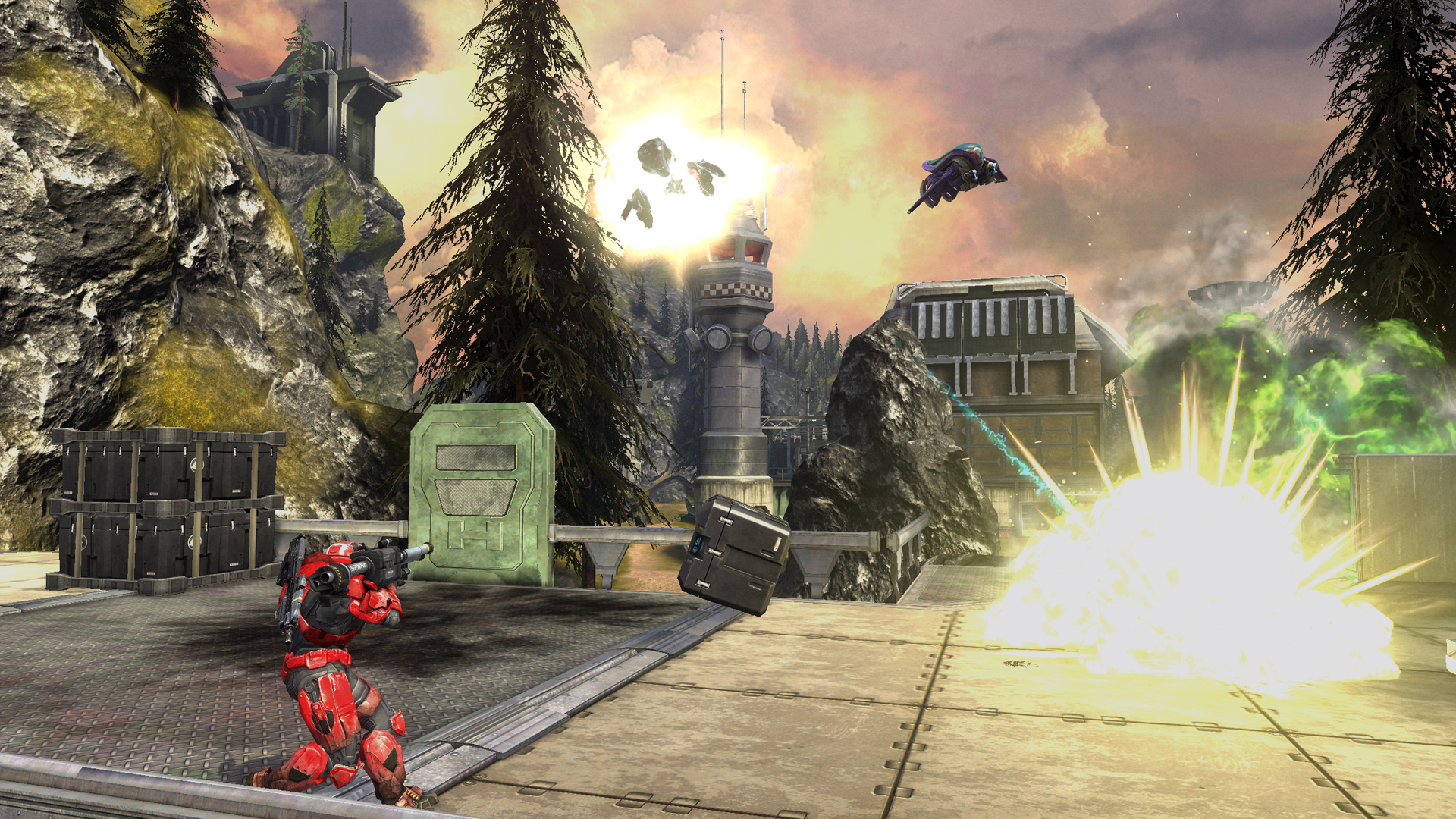
It’s always a big deal whenever a new map pack is released into the Halo universe, but the new Defiant Map Pack for Halo: Reach carries an extra bit of weight to it. Defiant marks the passing of a torch, as 343 Industries takes over Halo from Bungie. This is 343’s first major playable content for the franchise, made with the help of developer Certain Affinity.

With the slogan “Defy the Covenant” at its heart, you can download three new maps, Unearthed, Highlands, and Condemned now for 800 Microsoft points ($10). But except for the Halo hardcore, are three new maps worth the steep price?

MAP MAYHEM

Superb Level Layout – The biggest strong point for the Defiant Map Pack for Halo: Reach is the terrific layout and variety of the new maps. If you are a fan of Firefight, then you will love the multi-tiered desert base and scattered vehicles that Unearthed provides for you and three friends. If you are looking for a wide-open Slayer level with plenty of hiding spots, then Highlands might be a dream come true. My personal favorite was easily Condemned, which is set aboard a damaged Orbital Space Station. A circular map with clear landmarks at the compass points, Condemned also features a damaged zero gravity cross point in the middle that usually features a top tier weapon for whoever can fight to the top of the generator first. This can make for a lot of great matches from Oddball to your traditional Slayer.

Crisp Graphics – Each map is absolutely beautiful looking and has unique features, but they all fit in perfectly within Reach. Unearthed takes place in an abandoned base that provides an interesting dichotomy against the golden desert sand as grunts pour in from all angles. Highlands is the largest map in this new pack and also the most diverse looking. It features waterfalls, lush vegetation, dark caves, and this is all book-ended by a pair of marine bases with Covenant ships blasting away just over the horizon providing a previously unseen color palette all at once on your screen. And Condemned is the icing on the cake; the massive wall sized windows of the Orbital Space Station allow you beautiful looks into deep space and the planet Reach itself.

Vehicular Manslaughter – Compared to the other maps, Unearthed and Highlands provide some of the best opportunities for vehicular combat of any map due to there being plenty of vehicles and weapons to counteract those vehicles. In Highlands, Mongooses, Ghosts, and Warthogs are bountiful on one end of the map and used to cross the lush expanse to reach the other side. On that other side are laser cannons and missile launchers for the opposing team to use to counteract any blitzkrieg that their foes may try to unleash and is especially effective in Capture the Flag style matches. The Unearthed map features Rocket Warthogs and Ghosts. With no true corners for the Covenant to back you into, you can run rampant in the desert blasting away deep into Firefight mode with your buddies.

DEFY THE DLC

Unearthing a Flaw – One of the most interesting and risky aspects of this map pack is that the Unearthed map pack is exclusive to the Firefight mode. For a game where the majority of its online action deals in the versus elements instead of the cooperative, this was a huge risk and might turn off a lot Slayer and Invasion mode fans since this makes it seem more like two maps for $10 instead of three.

Steep Price to Pay – One of the biggest problems with DLC in general and not just this pack, is the over-inflated price you pay compared to the amount of content you receive. With three maps, one exclusive to Firefight, and only three achievements for 150 points, the Defiant Map Pack does not make me feel like I am getting the full bang for my buck. Ten dollars is a bit too much and will probably only be worth it to hardcore Halo: Reach players. Otherwise, I recommend waiting to see if it goes on sale or gets bundled with the Noble Map Pack.

At the end of the day, it really comes down to how long your Halo: Reach disc has been in your Xbox 360. If you haven’t played it since two weeks after the launch date, then you may not have even realized a new map pack was released. If Halo: Reach is your go to online multiplayer shooter right now and you’ve racked up enough credits where you could buy and sell every noob out there, then you will be very satisfied with these new maps even with its steeper than necessary price.

-Ray Carsillo

Originally Published: January 12, 2011, on youtube.com/CGRUndertow

As a part of CGR Undertow, I reviewed Battlefield: Bad Company 2 for the Xbox 360. This was released only a month after Call of Duty: Black Ops as a way to directly compete with it and remind folks who does Vietnam warfare best.

Originally Published: December 12, 2010, on Youtube.com/CGRUndertow

As a part of CGR Undertow, I reviewed Battlefield: Bad Company 2 for the Xbox 360 from EA.

Originally Published: November 29, 2010, on ClassicGameRoom.com

As a part of CGR Undertow, I reviewed the Halo: Reach Noble Map Pack for Xbox 360 from Bungie.

Originally Published: November 29, 2010, on ClassicGameRoom.com

As a part of CGR Undertow, I reviewed the Deluge DLC for the third-person shooter Crackdown 2 from Ruffian Games.