Category: EGM (Electronic Gaming Monthly)


It’s very hard to whittle down a year’s worth of games to a list of merely five. EGM had almost 120 games up for best of the year voting this time around, of which I personally beat 87 at the moment of my writing this. (Who needs a family anyway? So overrated.) Nevertheless, some games took weeks, almost months to get through; some barely took more than a lunch break. But at the end of a grueling and arduous processing period that would have broken lesser men, I emerged with a list of my personal top five from 2016. I give these games my highest recommendation, and hope you enjoy them as much as I did.

#5
Publisher: Microsoft Studios
Developer: The Coalition
Platforms: Xbox One, PC
Gears of War 4
I was cautiously optimistic when it came to Gears 4 prior to release. The original trilogy had wrapped everything up so nicely, and the prequel was so lackluster, that I really wasn’t sure if an adventure that followed Marcus’ son could capture the magic of the original three. But, thankfully, my fears were quickly assuaged. New enemies, a Sera wracked by new natural disasters as a result of Gears 3’s ending, and a new cast was just what the doctor ordered to put Gears of War back on top. Along with the thrilling campaign, the multiplayer was a return to form, too. New weapons, maps, and modes, plus the card system to reward players for playing certain ways, gave it a much-needed shot in the arm. If I ever find the time, this is the one multiplayer I’m returning to.

#4
Publisher: Microsoft Studios
Developer: Playground Games, Turn 10 Studios
Platforms: Xbox One, PC
Forza Horizon 3
As much as I love racing games,—and the Forza series in particular—it’s hard to believe it made my top five. Don’t get me wrong, it’s not like I’m saying it snuck in here. On the contrary, I just can’t believe how much I loved it. Sports and racing games sometimes get forgotten, or left in a category all their own (or weirdly mashed into one category). When it comes time for Game of the Year, for me anyway, everything is on the table. And hands down, no doubt, Forza Horizon 3 is one of the best all-around experiences I’ve had in 2016. If it wasn’t for the fact that my job requires me to play dozens of games a year, my tires would still be warm on my precious dune buggy as I bound over the hills of the Outback. With tons of championships still to be won, I can’t wait to dive back into this one over winter break.

#3
Publisher: The Pokémon Company
Developer: Game Freak
Platforms: 3DS
Pokémon Sun/Moon
I’ve said it a hundred times I think at this point, but I’ve been playing Pokémon since it first hit these shores almost 20 years ago, and I don’t think since that original entry has a game in the series made me so happy. Pokémon Sun/Moon’s removal of traditional gym battles, reimagining of friends and rivals, integration of legendary Pokémon into the story, and multitude of side activities to do blows away every previous entry. The fully-realized 3D world and movement make a huge difference when roaming around the islands of Alola, and the removal of HMs and adding ride Pokémon to get from point A to point B quickly make the chore of traversal a thing of the past. Almost every issue we’ve had with previous Pokémon games has been addressed, and the game still has all the great battle strategy and training we’ve come to expect over the years. I can’t wait to see where Pokémon goes next.

#2
Publisher: EA
Developer: Respawn Entertainment
Platforms: PS4, Xbox One, PC
Titanfall 2
If you want to see a master course in level design in action, play Titanfall 2. Rectifying one of the major gaffs of the first game by including a campaign this go around, Respawn Entertainment turned my world on its head and inside out, and I loved every second of it. If you told me I was going to cherish the relationship between a pilot and his robot at this start of this, I’d have laughed you out of the office. Now, though, I think it’s one of the strongest bonds conveyed in a game. It’s not the best written, since gameplay definitely still takes the reigns most of the time here, but if you want a non-stop, adrenaline-fueled roller coaster ride with giant robots, then you need to play this game. Plus, the multiplayer is just as tight this go around as in the first one. It almost doesn’t get better than this.

#1
Publisher: Playdead
Developer: Playdead
Platforms: PS4, Xbox One, PC
Inside
I’m just as shocked as anyone that I picked indies as my game of the year in back-to-back years now, but the truth of the matter is that I absolutely adored Inside. There was no other game that I was talking about well after I beat it more than this near-perfect little puzzle platformer. The adventure of trying to escape a world making its best attempt to crush you in every way imaginable surely has more metaphors buried in it than I can uncover here in this blurb, but throw that in with an insane ending that you’ll never see coming, and I’m still excited about it even just writing this. I did not know how Playdead would be able to top their first amazing effort with Limbo, but they did, and if anyone believes in the sophomore slump, they clearly never played Inside.
The 6th Annual “The Colors, Duke! The Colors!” Award for Most Colorful Game presented by Popsicle (not really)
Uncharted 4: A Thief’s End
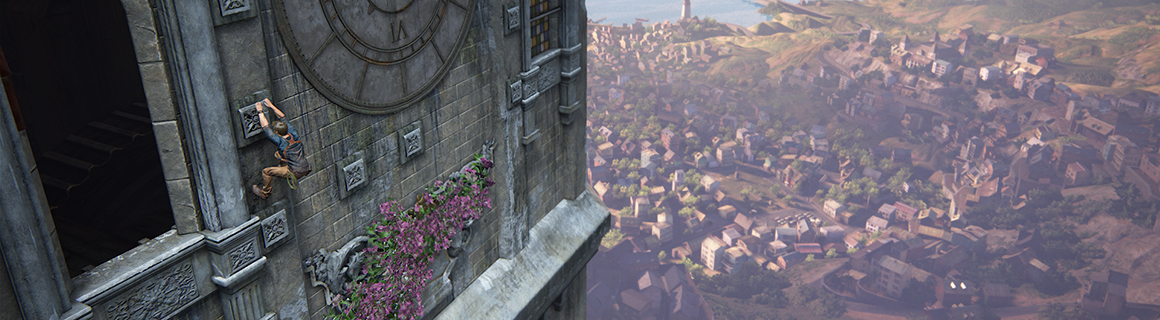
Continuing my annual tradition, for as many great looking games as were out there this year, none looked as good to me as Uncharted 4: A Thief’s End. From the animation for all the characters to the remote locales that Drake explored, the game was simply gorgeous. Driving my jeep through the mud, boating on crystal clear waters, and climbing through overgrown jungles are all things we’ve seen in games before, but I don’t think any game has ever done them better. So, it may not have made my Top 5, but I needed to at least shine a small light on the beauty of this visual gem.
The Michelle Obama Award for Battling Obesity
Pokémon Go
Although strides have been made with motion controls and virtual reality, gaming has always been, and really remains, a pretty sedentary activity. Then Niantic released Pokémon Go this summer, and millions of people got up out of their chairs and started walking around—including yours truly. Heck, even to this day it affects my lunch habits, as I’ll walk places now in order to hatch eggs and get candy in the game. I met new people, found new places in and around Los Angeles, and spent more time outdoors than I had in a very long time. I’d still love to see battling and trading implemented at some point, but for now, kudos to Niantic for doing what almost nothing could for me for a long time: giving me a reason to get up and go outside.
The “Reality Sucks, Let’s Go Somewhere Else” Award
Robinson: The Journey
2016 will be remembered as the year VR really hit mass-market, and so it seemed fitting to shine a light on one of the best games out there for it. While many games successfully brought the sensation of piloting mechs or planes to life, my favorite experience was when I got to explore a strange new world on foot. Robinson: The Journey revolves around a spacefaring boy lost on a strange planet filled with dinosaurs. Avoiding Velociraptors, T-Rexs, and Pterodactyls was invigorating, and got me using my PS VR headset probably more than any other game out there. This experience, more than any, other has sold me on the future of VR.
EGM’s Best of 2016 Coverage
We’re taking a look at the best games of 2016 all week, from Christmas day through December 30th. Check back every day for our Top 25 Games of 2016, as well as our personal lists for the games we loved most this year. Check here for everything that’s been posted so far.

I’m sure like many gamers of my generation, stomping on Goombas and Koopa Troopas with Mario was the first video game experience we had. Over 30 years later, Mario’s moves and looks may have been consistently upgraded, but the simple joy of jumping on an enemy’s head and running for the flagpole goal remains ever satisfying no matter the system. So, with Mario appearing over on a mobile platform for the first time ever in Super Mario Run, I’m sure a lot of us were more than willing to make the leap with him. While the game may have the look and feel of a proper Mario, however, there are enough questionable decisions here to have made this one of my least-favorite trips to the Mushroom Kingdom.

Like the start to almost every Mario adventure, Princess Peach invites Mario over to her castle, and Mario arrives just in time to see Bowser kidnap his beloved. Again. This time, Bowser also proceeds to lay waste to the entire Mushroom Kingdom, reducing it to rubble and scattering the Toad population to the winds before he escapes to his fortress.

The bulk of Super Mario Run is comprised of 24 stages across six worlds in the game’s Tour mode. The first three stages are free to everyone who downloads the game, which I appreciate because it gives you a pretty solid taste of the game before you decide if it’s something you want to drop $9.99 for—a steep price to pay when talking about mobile games usually.

As the name would suggest, the game is an endless runner—Mario never stops moving normally, and all you have to do as the player is tap the screen to make him jump. There are special blocks carefully placed in the game that will pause everything, but if Mario misses them, he just keeps running and jumping at your command. The only other time he’s not sprinting to the right is in certain Ghost Houses and Boom Boom battles, where a wall jump will start Mario heading in the other direction.

MariovsBowser1160

Despite Mario’s legs always churning like a locomotive, a lot of the classic platforming challenge we’ve come to love from the series remains, and never being able to stop actually adds a new layer of difficulty to the gameplay. Of course—as Super Mario Run has more of a casual flair—there are no lives to lose or no real consequences for failure (unlike Mario’s console outings). Still, there is challenge here, since you need to beat a stage in order to advance. Timing your jumps on or over enemies becomes critical as moving platforms and other obstacles are added to each subsequent stage. And, in order to collect the three sets of five special coins (pink, purple, and black) that are scattered in each stage, you’ll need to use every trick the game gives you to grab them successfully. Since only one set of coins appears at a time, if you’re obsessed with collectibles, you know you’ll have to play through each stage at least three times to nab them all.

If collectibles aren’t your thing, then one downside to the full game of Super Mario Run is that even with the challenge steadily ramping up, it shouldn’t take you more than two or three hours to knock out all 24 stages. Drabbing all those aforementioned collectible coins does change the stages slightly (platforms and enemies move to make the new coins challenging to reach), but if you’re not a collectible fiend, you’re likely to end up disappointed at those coins being the driving force behind the main game’s replayability.

There are two other modes that do try to keep you coming back outside of the Tour mode, with the first being Toad Rally. In order to try to lure the scattered Toads back to the Mushroom Kingdom, Mario can spend a Toad Ticket—easily earned via a daily bonus and completing stages—to take on the ghost of another player in a particular stage. If Mario can outperform the ghost by collecting more coins, defeating more enemies, and just generally progressing farther than the ghost in the time given, then Mario will lure Toads back with his impressive feats and bolster the population of the player’s particular Mushroom Kingdom. If Mario loses, some Toads may leave your Kingdom, so there is a risk involved—but luring back more than you’ve lost helps level up your game, potentially leading to expansion.

Why would you want to expand it, you ask? Well, Mario can also spend collected coins to help rebuild the Mushroom Kingdom in Build mode, where you’ll use Toad Houses, statues, hills, flower fields, and other items to help bring the Kingdom back to its former glory. Build enough structures, and have enough Toads, and you can expand the Mushroom Kingdom via Rainbow Bridges. You can also unlock new characters this way, such as Luigi or Yoshi, and each handles a bit differently than Mario in the main game. If world building is something that appeals to you, Toad Rally and Build mode work together to offer an interesting alternative to just replaying all the levels again and again.

MarioRunMushroomKingdom1160

Personally, though, I didn’t find this to be enough to make me want to keep coming back to Super Mario Run. World building really isn’t what draws me into a Mario game. I admit I could see myself grinding for all the collectible coins to get more playtime out of each stage, but Super Mario Run has some technical shortcomings that really came to be fatal flaws which would keep me from doing this.

The first is something that I’ve been noticing with more and more mobile games lately, and that’s the fact that they have trouble performing on older mobile devices. I originally started playing the game on my iPad 2, and the game would lag terribly and crash after every few stages. I talked with some friends who had also tried it on older gear, and they had the same issues. When I switched to my iPhone 6, however, everything changed for the better. The lag and crashing issues dissipated, but let this serve as a warning to anyone without a more recent phone or tablet to play on.

The other technical issue is absolutely unforgivable in my book, and really soured my opinion of this game: the fact that it requires you to always be online. I think Nintendo has gotten a lot of their priorities confused lately; Super Mario Maker for the 3DS doesn’t let you go online to share stages you’ve created, and then you’ve got Super Mario Run, a mobile game, requiring you to always be online. I even put my phone in airplane mode to double check, and sure enough, you can’t even get past the title screen if you’re offline—an error message just keeps popping up, even if you paid for the entire game and not just the three demo stages.

I understand that you need the online aspects for the Toad Rally mode and the ghosts present there, but the fact you can’t play the main game offline is puzzling at the very least. With the holidays coming up, I thought Super Mario Run was going to be releasing at the perfect time considering all the long plane flights and car trips I’ve got coming up, and I’m sure I’m not the only one traveling over the next couple of weeks. The fact that I can’t play the game in a car, subway, or bus if I’m using a device without cell service, or on a plane at all—places where people are most apt to want to play mobile games—feels like Nintendo shooting Mario in his foot. This is one of the worst examples I can find of always-online gameplay, and it really hampers Super Mario Run and the potential enjoyment of it tremendously.

MarioRunPauseBlock1160

Super Mario Run has a solid core as a mobile game. The endless runner style is nothing we haven’t seen before, but adding Mario’s classic platforming challenge created an extra degree of difficulty we don’t always get with the genre. Unfortunately, this was the brightest spot for this game. Even with all 24 stages, the main game is short, and relies heavily on collectibles and side options like rebuilding the Mushroom Kingdom to keep you coming back for more. Couple this with the fact that it needs to always be online to even be playable, and I think Nintendo really misses the point of what mobile games are supposed to be. Super Mario Run isn’t the worst mobile offering I’ve seen, but it could—and should—have been so much better.

Publisher: Nintendo • Developer: Nintendo EPD/DeNA • ESRB: N/A • Release Date: 12.15.16
6.0
Super Mario Run does a nice job of capturing the feel of a classic Mario game. The fact that it needs to always be online in order to play deters me from grinding through its collectible driven-gameplay, however, since it limits when and where I can actually play the game—defeating one of the primary purposes of playing a mobile game in the first place.
The Good Challenging platforming that will instantly remind you of other Mario games from over the years.
The Bad The always-online aspect is infuriating how much it can hinder when and where you play.
The Ugly All the times I wanted to say, “that’s what she said” whenever someone mentioned you can play with it with just one hand.
Super Mario Run is available on iOS platforms and coming later to Android. Primary version reviewed was for iPhone 6. Review code was provided by Nintendo for the benefit of this review. EGM reviews games on a scale of 1 to 10, with a 5.0 being average.

The Academy of Interactive Arts and Sciences announced this morning that Bethesda Game Studios’ Executive Producer and Game Director, Todd Howard, would be welcomed into their Hall of Fame at the upcoming 20th annual D.I.C.E. Awards. Howard is the 22nd individual to receive the honor, and will be presented the award by his long-time colleague, Pete Hines, Bethesda’s VP of Public Relations and Marketing.

As described by the AIAS themselves, the Hall of Fame honor is bestowed on game creators who have been instrumental in the development of highly influential games and moving a particular genre forward. These individuals demonstrate the highest level of creativity and innovation, resulting in significant product influence on a scale that expands the scope of the industry. Past AIAS Hall of Fame recipients include: Hideo Kojima (2016), Leslie Benzies (2014), Dan and Sam Houser (2014), Tim Sweeney (2012), Dr. Greg Zeschuk (2011), and Dr. Ray Muzyka (2011).

Todd Howard is likely best known for being integral to the growth and direction of The Elder Scrolls and Fallout franchises. Howard began his video game development career at Bethesda in 1994, with his first game development credit coming in 1995 with The Terminator: Future Shock. From there, Howard would join the Elder Scrolls team as a designer on The Elder Scrolls: Chapter II – Daggerfall. He has remained with the series ever since. In 2008, serving as executive producer and game director, Howard was also integral to ending the decade long dormancy of the Fallout series with Fallout 3.

“Todd is revered by legions of fans not just for his creative leadership over the years but for his humility and humor,” said Ted Price, CEO and Founder of Insomniac Games, and Vice Chairman of the AIAS. “Despite the fact that he’s helmed several of the most successful franchises in the history of our industry, he consistently defers praise to others and is the quintessential team player. Yet it’s Todd’s vision and strong direction that has brought Tamriel and the Commonwealth to life for millions around the world. I’m in awe of his accomplishments and am proud to call him a friend. I can’t think of anyone who deserves this honor more than he does.”

The 2017 AIAS Hall of Fame Award will be presented to Howard during the 20th annual D.I.C.E. Awards on Thursday, February 23rd, 2017, at the Mandalay Convention Center in Las Vegas, Nevada. For those unable to attend in person, stay tuned to EGM for details on how you’ll likely be able to stream the awards on that date.

It’s been a long time since an extreme winter sports video game has really resonated with gamers. After the genre saw quick success with games like SSX, many companies have tried and failed to get a foothold in the category and capture a bit of the magic some of those early games had. But even with bigger mountains, deeper customization, and more realistic physics, many have fallen like a boarder unable to stick the landing after a 1080. However, I went into Steep, Ubisoft’s new attempt to fill that winter sports game void, with hope—only instead to find myself feeling like someone having fallen into a snowdrift, believing there to be something more solid underfoot when there was not.

Steep starts off well enough, with a quick tutorial that introduces you to the four different disciplines available right from the start: skiing, snowboarding, parasailing, and wingsuit flying. From there, your extreme athlete of choice will be able to explore the Alps via any of these methods or by scouting out locations with their binoculars, unlocking drop zones or challenges that they can then fast travel to by helicopter. By performing various death-defying feats at these spots, you will level up and unlock more of the mountain range’s peaks for exploration until you’ve conquered them all.

As soon as you set foot on your first mountain top, you’ll have to give Ubisoft Annecy some credit. This game looks gorgeous, and each mountainside has character to it. Frozen lakes nestled in valleys serve as ice bridges between crags, pine forests play the role of natural course boundaries, and cozy villages jutting out of rocky cliff sides are ready to welcome you as you explore. And, when your character sinks knee-deep into the snow as you wade to an edge to jump off, or you notice the light reflecting off of cabin windows at different angles as the dynamic day/night cycle proceeds, it’s hard to deny that Steep does a stellar job of making you feel like you could actually be in the Alps.

Multisports1160

The attention to graphical detail doesn’t just permeate the mountain, though. Your athlete is fully customizable, and the more tasks and events you complete, the more gear you can potentially unlock. Helmets, jackets, skis, boards, parachutes, wing suits, goggles, boots, beanies, and more can all be switched on your person. Of course, some items are also heavily labeled with brands like RedBull and GoPro, but they’re some of the most prolific advertisers for winter sports—so while some may find it obnoxious, it’s entirely realistic.

For as polished as Steep is visually, I’m afraid it’s hard to get excited about too much else here. That’s not to say there’s not a lot to do; on the contrary, there are over 100 courses, plus 30 “mountain stories” that give some more life to the area—ranging from ringing a bell in one of the village churches to just following another boarder through a winding path as she recounts some local mythos. The problem is the game doesn’t do a very good job of leading you through all these different challenges, or in giving you a reason to seek them out.

It flies in the face of conventional wisdom, but Steep actually opens up its world to you too quickly. After beating the first few challenges and leveling up your athlete, almost the entire world can unlock at once. The fast travel map does an awful job of clearly labeling what events are old and what you just opened up. Most times you have to hover over a point to see if you’ve already set a best time or score to know if you’ve played it or not, because from that bird’s eye view, everything looks exactly the same. There are also no clear goals that you’re aiming for besides win every challenge. There’s some bigger-name competitions going on, but you can stumble on them just as randomly as some no-name experience-boosting challenges. So, you never feel like you’re working towards something—there’s no real end goal.

VillageTricks1160

Should the thrill of the race be enough for you, though, Steep does try to inject a little replayability into each course to lengthen the life of this experience. First, another way for GoPro to work its way into the game was to be the foundation for a new replay system that allows you to cut together a highlight package, similar to how you would if you were really shredding down the Alps like one of these pro athletes. GoPro cameras are all over extreme sports now, usually attached to the heads and boards of athletes, and offering up new and interesting angles on non-contact sports we wouldn’t otherwise get. So, if putting together a highlight reel of your gaming prowess is something you like to do, Steep has an impressive suite of tools at your disposal here.

Another way Ubisoft Annecy tried to make Steep replayable—and something I found particularly interesting—is the fact that the game is always online and always in multiplayer. Like a real mountain, you’ll see other players taking on the courses as well, and depending on your settings, you can even bump into them. With a press of a button, you can group up with others to add a little more competition to things, giving you purpose beyond just racing once and getting gold. You can also carve out your own path in free roam and then set it up as a challenge to others online, giving you a rough create-your-own course feature that is extremely easy to upload to others.

Of course, there is an issue with this needing to be online all the time: If you can’t connect, you can’t play the game. During my time with Steep, it happened once where I couldn’t play at all for almost an hour, and kept getting bumped back to the title screen. This can be a huge hindrance to the game and its community, especially considering Ubisoft’s history of issues with server maintenance and stability to begin with. The fact I can’t play the game offline at all is unforgivable, showing an overabundance in relying on the social aspects to keep what is clearly a barebones experience interesting.

FirstPerson1160

Steep’s greatest sin, however, might be its most damning: The game simply doesn’t control very well in most of its categories. I found the wing suit sports to be the most responsive, and therefore ended up trying to curtail the final hours of review time towards those to make what was an otherwise frustrating experience somewhat palatable. Parasailing felt like I had no control whatsoever, praying for updrafts to keep my parachute properly open and moving in the direction of the finish line.

Skiing and snowboarding were the most prevalent sports, and were as fun as wingsuiting—when everything worked. Unfortunately, there were times where I’d be trying to pull off stunts and it’d feel like the controls were locking up. Even hurtling down the mountain with a bat outta hell’s worth of momentum, I’d hit the jump perfectly and instead of performing the twists, turns, and rolls I’d expect, my athlete would almost listlessly drift in the direction I was jamming the thumb stick. The worst of it all would then be when I’d land, thinking I had at least gotten my rider adequately back to center, but instead he breaks every bone in his body as he tumbles head-over-end down the mountain. The rag doll physics were at least humorous, but it felt like the game should’ve just focused on two sports instead of four and tried to perfect those as much as possible.

Steep had a lot of good ideas at its core. Some, like its replay and social features, are a dream when everything is running smoothly. Unfortunately, the game is more frustrating than fun due to its lack of focus and execution in both controls and overall scope. What many were hoping would be a smooth ride down the mountainside instead feels like smacking into pine trees repeatedly. I wouldn’t be surprised if fans of the extreme winter sports genre again feel like they’re left standing out in the cold from this one.

WIngsuits1160

Publisher: Ubisoft • Developer: Ubisoft Annecy • ESRB: T – Teen • Release Date: 12.02.16
6.0
The multiplayer and replay ideas that Ubisoft implemented in Steep were great, and the game looks terrific. It’s held back as a whole, though, by listless controls, a directionless world, and an always-online requirement that brings everything crashing down like an avalanche when the servers decide to act up.
The Good Great visuals; the create-a-challenge and multiplayer help keep things fresh.
The Bad Controls feel inconsistent and unforgiving. Always online except when you aren’t and can’t play.
The Ugly Breaking every bone in my boarder’s body when failing to stick a landing.
Steep is available on PS4, Xbox One, and PC. Primary version reviewed was for PS4. Review code was provided by Ubisoft for the benefit of this review. EGM reviews games on a scale of 1 to 10, with a 5.0 being average.

The third annual PlayStation Experience took place this past weekend, and this year was the biggest and best yet for Sony’s year-end celebration. More announcements than ever before were made at the show—but more than that, the show floor had more games than ever before, too. I was able to go hands-on with nearly two-dozen titles while at the show, and I’ve whittled those experiences down to the 10 best games that I think you should be chomping at the bit for.

SuperMegaBaseball2_1160

Developer: Metalhead Software
Publisher: Metalhead Software
Super Mega Baseball 2

The original Super Mega Baseball was the kind of arcade-y experience that baseball games started out as back in the day. Due to its initial December release back in 2014, it might not have gotten the love it deserved, but it was good enough to easily cement its status as a cult classic. Clearly, the love was heard loud and clear from the folks over at Metalhead Software, as they’re now working on a sequel planned for 2017. Super Mega Baseball 2 features more stadiums, more players, and more modes than the original, while still bringing over its 1-4 player couch co-op/versus play. Its controls remain easy to pick up but difficult to master, as your pitchers have every possible pitch imaginable, and knowing when to swing for power—and getting the timing right—or swing for contact is critical to success. If you love baseball, and are looking for an alternative to the more serious simulation that is The Show, Super Mega Baseball 2 is all set to knock it out of the park again.

Dreadnought1160

Developer: Yager Development
Publisher: Grey Box
Dreadnought

We’ve been hearing about Dreadnought for a while now, and on the precipice of its 2017 release, we got the awesome news that it’s also coming to PlayStation 4. For those unfamiliar with the game, you take control of one of a series of massive starships, waging space war against those who would stand against you. Each ship has different statistics based on their size, speed, and armaments, and playing what best suits your style—and what can best help your team win—will be critical, as the planning stages are just as important here as the actual combat itself.

My one worry with the PS4 announcement was how the controls (based around a mouse/keyboard) would transition to a controller. Luckily, the team found a way to do it. The PS4 controller’s touchpad is utilized when choosing to divert extra power to shields, engines, or guns, picking up the slack of the lack of buttons on the controller face. And, after playing a couple matches this way, I found using a controller to be just as intuitive—if not more so—than the PC controls. Now, it’s just a matter of time before we can get access to the beta and become captains of our own starships.

YookaLaylee1160

Developer: PlayTonic Games
Publisher: Team17
Yooka-Laylee

If you loved the original Banjo-Kazooie games, then Yooka-Laylee is not only a love letter and spiritual successor to them, but to all the platformers of the N64 era. During my PSX demo, I was introduced to a massive world chock full of collectibles, puzzles, and colorful characters that shared the British tongue-in-cheek, fourth-wall breaking humor that made us all smile a little wider back in the ‘90s. The single area I saw required Yooka and Laylee to change the seasons in order to collect every single Pagie they could as they try to save all the world’s literature from nefarious forces. Besides the seasonal puzzles, Yooka the chameleon can also eat special berries that changed his attributes. For example, one makes him turn to stone in order to withstand high winds, while another allows him to spit ice and freeze platforms. Laylee the bat also gets in on the action, shooting out a sonic scream that can wake up sleeping totems and reveal new platforms to hop across. Simply put, the gamut of gameplay on display here—from shooting to platforming to puzzle solving—made me feel like a kid again in all the best ways.

Pyre1160

Developer: Supergiant Games
Publisher: Supergiant Games
Pyre

I love games. Always have, always will. Being a games journalist for nearly a decade now, however, means I love them differently. I appreciate them, but it’s rare I ever get outwardly excited anymore. There is an exception to every rule, of course, and I admit I absolutely mark out for anything Supergiant Games makes. So, when they officially announced that Pyre would have a local versus multiplayer mode at PSX (something we speculated when we first saw the game earlier in the year), and I got to play it? I went bonkers. And, it turned out, with good reason, because it seems Supergiant has taken the time and care they always apply to their worlds and their narratives, and have successfully done the same with multiplayer.

Much like the main game, Pyre’s multiplayer has two teams of three face off as you try to get a special orb into your opponent’s base—like a game of celestial basketball. The strategy and intensity that emerges from playing another human, however, takes the gameplay to an entirely new level. It’s difficult to predict these things, but I could easily see Pyre turning into a couch versus phenomenon. Supergiant told me at the show they’re trying to get online to work, but would rather no online than broken online. I think that’s entirely the way to go, because even as is, this game is primed to be a slam dunk.

Absolver1160

Developer: Sloclap
Publisher: Devolver Digital
Absolver

Following E3 2016, I had heard from fellow EGMer Matt Buchholtz how amazing Absolver was. After finally getting to try it out at PSX, I don’t think Matt gave the game nearly enough credit. On the surface, Absolver is an arena fighter where your character moves through a world, taking on opponents, growing stronger, and learning new moves in the process. Dig just a little deeper, however, and you find a game that celebrates fighting as an art form, a complicated dance of fists and feet and force that when perfectly flowing together creates a performance unparalleled elsewhere. This is where Absolver makes itself special.

Its visuals are already beautiful; the character designs remind me fittingly a bit of the dancer from Bound. But when you start to understand the timing of moves, your fighter’s four different stances, how you can properly chain moves together, and even customize your own combos from dozens of moves, there’s a level of detail here rarely seen in any fighting game—and which has me equally excited for both the campaign and its versus modes.

starblood-arena1160

Developer: Whitemoon Dreams
Publisher: Sony
Starblood Arena

When I saw Starblood Arena announced at the PSX 2016 showcase, the first thing that came to mind was how it would it compare to RIGS—another game involving players shooting each other while piloting mechs that was, to me, PlayStation VR’s best launch title. After playing it, Starblood Arena might be even better.

Right off the bat, Starblood Arena provides a cast of colorful characters and mechs of different shapes, sizes, and stats to differentiate itself from other early VR shooters (and inject some personality into the game). It also provides a full six axes of motion, meaning your mechs are constantly flying through the air and that threats can come from any angle. What Starblood Arena also does smartly is provide standard FPS controls with the two sticks on a controller, and then have finer aiming done by moving your head. This not only gives most gamers a control scheme they’ll be familiar with, but also reduces nausea-inducing situations down to nothing for most. Although I only took on bots in the limited demo—19:1 K/D by the way—the game features deathmatch and other standard shooter-fare modes. If Starblood Arena can build a solid player base, it could be the next great multiplayer game for PS VR.

GamesofGlory1160

Developer: Lightbulb Club
Publisher: Lightbulb Club
Games of Glory

The PS4 has been offering some interesting free-to-play fare recently, starting with the announcement that Gung Ho’s Let It Die was launching right there at PSX 2016 for everyone. Another F2P game that’s coming exclusively to the PS4 is Games of Glory, which could prove to be immensely popular among the multiplayer crowd. Combining MOBA elements with a Guardian mode, Games of Glory splits six players up into two three-person teams. Your team must attempt to win a best-of-9 series by holding the center of a map and keeping your designated captain alive for the entirely of a round. Who fills the role of captain always rotates between rounds, so every player could potentially be the captain three times. Each character has moves and roles similar to what you would see in your typical MOBA, including tanks, DPS, healers, and so on. Coming up with a strategy and combination of players to overcome your opponents isn’t easy, but it sure can be fun. Although only a few characters and only the one mode were available for play at PSX, some variety here could easily see Games of Glory catch on with its ease of play.

WhatRemainsofEdithFinch1160

Developer: Giant Sparrow
Publisher: Sony
What Remains of Edith Finch

I saw What Remains of Edith Finch a couple of years ago at E3, and have been waiting to find out the final, sordid history of the Finch family tree with bated breath ever since. Players are tasked with exploring the Finch family home, where whenever someone in the family meets with a tragic end, their bedroom is sealed off. By discovering new rooms, you also discover new tragedies and tales as you try to uncover the secret of the Finch legacy. With a release finally coming supposedly right around the corner, I played through one of the shorter stories on the tree, that of a twin brother who wanted to fly in the worst way—and got his wish.

What Remains of Edith Finch is the next step in interactive storytelling, providing players with fantastical experiences that also find ways to tug on heartstrings. The two stories I played through on two separate occasions took me places I never thought games might go, but when the game is finally done and we play through this entire collection of short tales, I think we’ll all be happy they did.

Yonder1160

Developer: Prideful Sloth
Publisher: Prideful Sloth
Yonder: The Cloud Chaser Chronicles

Imagine a Legend of Zelda game minus the enemies, and you’ll have a pretty rough idea of what to expect from Yonder: The Cloud Chaser Chronicles. Here, you play a boy or girl who, after waking up in a mysterious world, sets out both to figure out how they got there and help purge a mysterious force that is consuming the land. To do that, you’ll have to find fairy-like creatures on your journey that can help you purge the encroaching darkness. Along the way, you’ll also be able to build your own farm, befriend a variety of animals, collect resources, or go on quests for nearby villagers to earn the tools needed to open up more of the world. You can fish, chop wood, mine stone, and more to gather resources, which—when combined with your farming aspect—gives the game a bit of an open-world Harvest Moon feel as well. I admit, normally I prefer a bit more conflict in games of this ilk, but I’m curious as to where the story could go. As a change of pace, the peaceful open-world quests of Yonder might be just what we need as gamers.

Divide1160

Developer: Exploding Tuba
Publisher: Exploding Tuba
Divide

The twin-stick shooter is a pretty common video game staple; rarely has it ever been tied to a complex narrative, however. Enter: Divide. It’s a science-fiction action/adventure game that will demand every second of your attention. Every bit of information needs to be taken with a grain of salt as you work your way through a futuristic dystopia in search of your missing daughter.

What makes Divide even more interesting is its control scheme, which uses none of the PS4 controller’s face buttons. Instead, everything is mapped to triggers and the control sticks. Whether hacking a terminal to open a door, or aiming down the sights of your gun when in confrontations with soldiers or security bots, you’ll have to master this simple control scheme to work your way out of some complex jams as you dive deeper into the story.  Much like the story itself, Divide may look simple at first glance, but when you start to get past the surface, there is so much more to discover.

EGM‘s Ray Carsillo had a chance at PSX 2016 to go hands-on with the upcoming old-school, side-scrolling, beat ’em up that is Mighty Morphin’ Power Rangers Mega Battle. Playing co-op with another journalist, Ray chose Billy the Blue Ranger and took the fight to Rita Repulsa’s Putties, before facing off against King Sphinx. You can see the first level in its entirety in the video below.

Based on the original Power Rangers TV series, Mega Battle is dripping with nostalgia, even if a bit on the simple side when compared with most other games of the modern era. Mighty Morphin’ Power Rangers Mega Battle is being published by Bandai Namco and will release for PlayStation 4 and Xbox One sometime in January 2017.

Every year, Titmouse Animation (Venture Bros., Metalocalypse, Son of Zorn) throws a bacchanal in Hollywood called the Smash Party, where they invite family and friends to drink, be merry, and smash obsolete appliances with sledgehammers. Television sets, microwaves, potted plants, computers, and anything else that will explode with a satisfying bang when hit with a heavy, blunt object are brought into a batting cage, and revelers take turns letting out any pent up aggressions.

This year marked the tenth anniversary of the event. I was able to attend for the first time, though, because in order to help mark the celebration, Titmouse announced a partnership with Viacom NEXT to bring the idea of the Smash Party to virtual reality.

Smash Party is an HTC Vive free exclusive launching by the end of the year, and just like the real-world festivities, you step into a cage surrounded by pottery and appliances ready to succumb to your barbed-wire baseball bat like Glenn did to Negan (too soon?).

Using one of the Vive’s controllers, you swing at breakable objects, needing to completely decimate everything in the cage in order to advance to the next stage. The game utilizes the bright, beautiful animation style that Titmouse is known for—anyone who is familiar with the shows they’ve brought to Adult Swim will recognize the style immediately—and it gives everything a fitting, surreal feel. With multiplyers and a timer constantly working against you, after playing Smash Party myself I can attest that the game has a satisfying arcade feel. There are even bonus rounds where an enraged squid will break down a wall of the cage and start soft tossing items at you like in an actual batting cage—but instead of balls it’s usually pieces of a tea set—again adding to the insanity of it all. Each experience is also short enough that it could be a fun party game as you pass the headset and controller around, everyone trying to reach that new high score.

While it’s not something that would make me want to run out and buy an HTC Vive, my short time with Smash Party has me feeling it would be another enjoyable group experience that the headset is becoming known for. We’ll have to wait for a release to see what kind of legs the game actually has, but as a free download to let off some steam, Smash Party is shaping up to be my kind of distraction. And I can’t wait to see what Titmouse rolls out for next year’s actual party now.

When I previewed Let It Die—a PS4-exclusive, free-to-play, hack ‘n’ slash rougelike from the twisted minds at Grasshopper Manufacture—for the first time back in April, it was a rough demo that conveyed some interesting ideas and mechanics, but left a lot to be desired. Many of the systems that would really drive home what this unique experience was meant to be were still absent then, and left me hanging onto promises of great things more than any tangible evidence that this experience could be special. After getting to go hands-on recently with a more complete version of the game, though, I can testify that Let It Die might be gaming’s new roguelike craze. To help give you a sense of the insanity this game wants to bring to the PS4, here’s a video of my first hour playing the game, uninterrupted aside for some menu traversal and load screens cut for the sake of time.

I’ve been playing Pokémon games for nearly 20 years now, and have loved almost every second of them. As exciting as all the changes I’ve seen have been over that time, some things have remained steadfastly the same. But, with the release of Pokémon Sun/Moon, many of those seemingly untouchable pillars of the Pokémon universe have been changed—resulting in the freshest game the series has seen since its early days, and possibly the best yet.

Sun/Moon begins like many other games in the series. You wake up at home, and your mom tells you to go meet the local professor to begin what will surely turn out to be another fantastical Pokémon adventure. Unlike in others game, you’re the new kid on the block here, having just moved to the new region of Alola from Kanto (the region from the original Red/Blue Pokémon games). Breaking from what you may be used to from the franchise’s previous locations, Alola doesn’t have eight gyms for you to defeat. Instead, you’ll travel to four islands—each overseen by a Kahuna and their Captains who serve as gatekeepers to the powerful Guardian Pokémon on each island—and conquering them all is your primary challenge.

Because of your character’s roots in Kanto, Sun/Moon has a lot of callbacks to that original region—as well as other previous Pokémon games—with cameos galore from both characters and Pokémon alike. No other Pokémon game up to this point has been as self-aware of the universe in which the games take place, and it makes the region feel bigger than it is because of the influences from each previous game manifesting themselves in different ways. It also drips of nostalgia, giving long-time fans something to get excited about when they recognize obscure references, while potentially filling in the blanks for newcomers that want to learn more about those earlier generations. A perfect example might be the new nefarious group of Pokémon snatchers named Team Skull, who are more incompetent and comical than the original Team Rocket, but whose modus operandi falls alarmingly in line with the Kanto crooks and less with the world changing extremists of later titles.

Alola may take some cues from previous games, but in many ways it has a dynamic all its own that might actually make it my new favorite region in the series. Part of that comes from the fact that Sun/Moon is again pushing the 3DS’ graphical boundaries. While X/Y offered the first polygonal graphics in a Pokémon game, there was still a lot of grid-based movement. Sun/Moon finally does away with this altogether (while also smoothing out some of those rough polygonal edges), giving your character the full 360-degrees of freedom to move around as you would in most modern games. Making most of the game incompatible with the 3DS’ stereoscopic 3D effect likely helped to boost the graphical power, and I, for one, did not miss it. The camera still remains out of the player’s control to help keep items and secrets hidden via perspective shifts, but this was a huge step forward to making the world of Pokémon feel even more alive and vibrant.

PokemonSunMoonStarters1160

There is also the aforementioned Kahunas and Captains, who give a shot in the arm to the old gym system. Instead of just battling your way to the top of each gym and then taking on the Elite Four, Sun/Moon offers up a wide variety of gameplay beyond battling. Each Captain will place you on a trial that involves battling at some point, but which also require you to solve some sort of puzzle, such as collecting the ingredients for a recipe or needing to pass a memory exam. Only then will you be able to take on their Guardian Pokémon in a fierce battle that will reward you with a Z-crystal—proof of you conquering the trial and your proficiency as a trainer, which also unlock more areas of Alola. Once an island’s Guardians and Captains are behind you, you’ll then face the island Kahuna as you try to conquer the four corners of Alola.

Speaking of Z-crystals, they’re just the first of several major changes to the battle system. Besides taking the place of traditional gym badges in how they prove your mettle as a trainer, they also unlock special moves for your Pokémon. While there are Z-crystals representing each of the 18 Pokémon types, there are also lesser ones meant for specific Pokémon like Pikachu, Snorlax, or the three new starter Pokémon. A Z-crystal move can only be used once per battle for your entire team, so choosing when and what Pokémon to use it for adds an extra level of strategy that goes far deeper than X/Y’s Mega Evolutions. My only wish now is that Pokémon could carry two items, because it sure is hard to take a Z-crystal away from a Pokémon unless you definitely know what you’re going up against in the next battle.

Another major change in combat is how the UI now provides a chart showing stat changes (like if you’ve been hit with Growl and your Attack has fallen) and what moves are strong against what Pokémon. The stat changes are depicted via a series of arrows, which could be better if we were given actual number changes—but it definitely helps if it’s a back and forth bout. At first, I admit I was leery about the idea of the game just telling me what moves were effective and what ones weren’t, but I suppose it falls in more in line with what a Pokédex is supposed to do. With so many Pokémon and types changing from game to game, most people were probably heading to Google every few minutes to look up a Pokémon they were unfamiliar with anyway.

My only issue with it is that it doesn’t go far enough. You need to capture or beat a Pokémon first before getting that information on your second encounter with it, whether in battle or in the wild. Why not just give people those stats from the start? Ash’s Pokédex in the cartoon gives him the information immediately upon seeing a new Pokémon. It could’ve, and should’ve, been the same here when Game Freak decided it was going make this change.

SunMoonRaticate1160

One other major change in combat comes in the form of the removal of Hidden Machines. HMs used to have major traversal or world changing moves like Surf, Strength, and Cut in them. They would take up a normally useful move spot for a member of your team that you couldn’t change, or take up a spot on your team altogether with a Pokémon meant to just know everything useful. Sun/Moon does away with this, although some HMs are still present as normal move-teaching Technical Machines if you want to impart some of the more effective combat moves (like Fly). Instead, you get a pager and can call seven special Pokémon to help you make your way around Alola. For example, you can call a Taurus to break away rocks, or a Charizard to fly you to different Pokécenters. It’s a no-cost service, frees up space on your roster, and might be the most important change yet that Sun/Moon adds to the series. The ease of use was great, and the effectiveness of my party increased tremendously because of it.

Besides the new island challenge and battling mechanics, there are plenty of side distractions to take part in as well. One new aspect is the Poké Refresh, which allows you to pet, feed, and play with your Pokémon outside of battle via the touch screen. A benefit to building up a good relationship with your Pokémon this way is it will offer unique bonuses in battle, but also is a free way of removing status effects on Pokémon. That means items like Awakening (cures sleep) and Antidote (cures poison) are only now necessary during battle—and that means less trips to the Pokécenter or Pokémart for medicines, and more time spent exploring the world and enjoying it.

There are also new places to visit, like your own personal set of islands you discover called the Poké Pelago. Each island in the Pelago can house the extra Pokémon you’d normally keep in Boxes at Pokécenters, which you still use to change your lineup. Now, though, they can train to level up or gather items for you on the side, instead of collecting dust as just another statistic in your Pokédex.

If you’re more about upgrading your trainer, another new feature called the Festival Plaza allows you to talk to people and earn special Festival Currency. This currency can then be used inside the festival to upgrade your trainer’s apparel and offers some much needed trainer customization to the game. Of course, I think it’d be easier if the game just let you customize your character fully from the get-go like every other RPG out there, but at least Pokémon is trying to get with the times when it comes to giving players a bit more expression on that front.

PokemonSunMoonPokecenter1160

The Festival Plaza is also where you can trade with or battle players online, or use the new QR scanner via the 3DS’ camera to scan friends’ Pokémon to add their info to your Pokédex (minus the trading aspect). If you’re all about battling like I am, however, then I can attest that—at least in a pre-launch state—I was able to connect to a few folks online, and found there to be minimal issues in one-on-one situations. You can even record your battles and save them to your SD Card to watch and analyze battles later. Besides one-on-one battles, there’s also two-versus-two and the new Battle Royal matches, where four players put one Pokémon in and the last one standing wins.

Unfortunately, it’s in these multi-Pokémon battles that some issues start to arise. Whether playing online, or even offline in the main game, whenever more than two Pokémon appear on screen (yours versus one other), the game starts to slow down a little, load times become more evident, and animation beings to crawl. These issues aren’t enough to ruin the experience, but they are enough to snap you out of your Pokémon reverie for sure—and it’s particularly shocking when this even happens against the computer in the main game.

There’s also a new feature where wild Pokémon can call for help. Sometimes, a wild Pokémon that’s about to faint will call on another of its species, turning a one-on-one fight into a two-on-one (which also triggers the above mentioned slowdown). It offers you, the player, more experience for beating more Pokémon, but—especially if you’re trying to capture one of the two—it can prolong the fight considerably. I once got in a cycle where I had to face seven Zubats because I would take one out and the other would keep calling for help. Finally, I just gave up and ran away because no Zubat is worth that much time. So, this is one feature that I hope future iterations of the game do away with.

Another addition that was hit-or-miss is the new Alolan variants of Kanto Pokémon. For example, there’s now a dark-type Rattata (originally a normal-type), or an ice-type version of Sandshrew (originally a ground-type). For the most part, I like the idea of collecting different types of the same Pokémon, especially since only one is needed to unlock the Pokédex entry. What I don’t like about it is when those Pokémon are used in battle. When an enemy trainer is about to throw out a Pokémon, it only says “Ace Trainer is about to use Ninetails. Do you wish to switch Pokémon?” Normally, Ninetails is a fire-type, and I would counter with a water-type. The game never tells you what variant is being thrown out until it actually appears on your screen. If it’s the ice-type Ninetails, I basically wasted a turn needing to switch out my water-type for a fire-type. It’s a minor thing, but considering how serious some of us take our battles, wasting a turn isn’t something to be taken lightly.

PokemonSunMoonLitten1160

Pokémon Sun/Moon provides the series a shot in the arm we might not have realized it needed. Battling is more efficient than ever, and that cranks the fun up to levels we haven’t seen since the early days of the series—even with the occasional slowdown issue. New and old Pokémon come together to symbolize the balance this game has struck between Pokémon’s past and its future, providing nostalgia for us franchise veterans and some history for newcomers. Combine all this with more side content than ever before, as well as a beautiful 3D world, and Pokémon Sun/Moon is nothing short of an instant classic.

Publisher: Nintendo/The Pokémon Company • Developer: Game Freak • ESRB: E – Everyone • Release Date: 11.18.16
9.0
A couple technical issues aside, Sun/Moon might be the best Pokémon game yet. It freshens up a formula some of us PokéManics might not have realized was growing stale until now. Trials and Grand Trials provide variations on familiar gameplay, and the removal of HMs and telling players how effective their moves are rejuvenates battling.
The Good The island trials will make you never want to battle in a gym again. Ride Pokémon doing away with Hidden Machines from previous games.
The Bad Some slowdown in battles involving three or more Pokémon.
The Ugly Why is my character always smiling? Even when things take a turn for the worst in the game, my character’s facial animation never changes.
Pokémon Sun/Moon are Nintendo 3DS exclusives. Primary version reviewed was Pokémon Sun. Review copies were provided by Nintendo for the benefit of this review. EGM reviews games on a scale of 1 to 10, with a 5.0 being average.

When it comes to my favorite stealth action franchises, Hitman always jumps right to the top. But, when I first heard that the newest Hitman game would be broken up into episodes across the year, I admit my heart sank. I was worried about taking a tried-and-true formula and trying to fix something that in my opinion wasn’t broken. Thankfully, after sitting down and beating the entire first season of Hitman, the series’ new episodic direction may be one of the best things to ever happen to it.

In the prologue to the first episode, we see a rare glimpse of Agent 47’s past, specifically when he first meets Diana Burnwood and joins the ICA. After that, it’s back in the present day, and it’s the usual trek around the world for 47 as Diana continues to assign him high-profile targets that the ICA has been contracted to remove. As 47 is doing this, it soon becomes clear to Diana that these more recent assignments were all connected as part of a larger puzzle—and the deeper she digs, the more she realizes a more sinister force may be at play. With 47 being the only person she can trust, the two must uncover a conspiracy that could shake the ICA to its core.

MarrakeshHeadmasterDisguise1160

Anyone who has played any of the previous Hitman games should be able to jump into this one relatively easily. By using disguises and unique opportunities in the environment, players will be tasked with knocking off multiple targets in every location, with each new locale in this case also representing a new episode. What’s so impressive about Hitman is there has never been more ways to accomplish your goals on each map. You can go with 47’s iconic suit, tie, and silenced silverballer pistols and try to get the perfect shot off before making a quick escape. Or, you could drop a lighting grid on someone. Or push them into a wood chipper. Or pose as a yoga teacher and snap their necks (I guess that part of the body wasn’t meant to be so flexible). The choices are many and varied.

There is one new feature, though, when it comes to how 47 tackles his objectives now: with Diana in his ear constantly monitoring the situation, he’s able to track kill opportunities. From overheard conversations to intelligence documents found on site, you can piece together exactly what you need to perform the best accident kills the series has seen yet, and actually follow objective markers in the world to pull off some of these spectacular hits. And, if you prefer the challenge of figuring it all out for yourself, you can always turn this option off. Even with all my Hitman experience, I still found this extremely useful considering how large each location is. Although, I do admit, there’s also a sick sense of satisfaction when you piece it all together on your own.

ColoradoAccidentKill1160

Even being episodic, Hitman still plays out in many ways like a complete game would. Each new location is massive, and throws new challenges 47’s way each time. Paris is likely the easiest of the maps, with plenty of cover, disguises, and opportunities as you crash a fashion show with hundreds of guests. Sapienza, Italy—a fictitious city off the Amalfi coast—gets a little harder, with heightened security and no crowds as you infiltrate a mansion. Marrakesh then puts your two targets in two different buildings with a busy town square between them, while Bangkok boosts the security yet again at a luxury resort hotel. An off-the-grid farm compound in Colorado makes things even harder by limiting cover and disguise opportunities and making you take out four targets. Finally, Hokkaido, Japan, removes all weapons and items before you start the mission inside a hospital for the wealthy. This escalation between episodes—from both a gameplay and narrative sense—coincides both with what you would expect from a game, as well as the heightened stakes of any action-drama TV series.

Of course, I believe this feeling was a lot more evident because I binge-played the season over a weekend. That’s one of the difficult things about episodic content: with weeks between game episodes, it can be harder to carry feelings over from chapter to chapter unless you replay a previous episode before starting a new one. I don’t believe that playing each new Hitman episode as it came out would’ve been able to keep that adrenaline flow I got from doing mission after mission going, whereas I enjoyed the gameplay much more by playing the entire experience in a short period of time.

BangkokTechDisguise1160

Although, I do have to say that there are some negatives to playing it all at once. While Hitman does a good job moving things forward, tying up enough loose ends by the conclusion of the season, and leaving a couple of questions unanswered for future seasons to explore, I felt there wasn’t as much of a connection strung between the episodes. Character development and narrative felt very bare bones, and I wonder if this came across more strongly because of my binge-playing, where I was able to see all the new characters’ short story arcs and minimal story progress very quickly.

One definite positive that comes from playing each episode as they come out, though, is the replayability. There’s more content here than ever before—both from the community and from Io Interactive—which keeps people playing each episode, and which no doubt helps keep them fresher in people’s minds. Once again, being able to create your own contract returns, allowing you to share with the community your own challenging hit orders. There’s also escalation missions from Io that add new targets and bump up the difficulty at a player’s discretion.

HokkaidoDoctorDisguise1160

Even more than that, however, is the new Elusive Targets. These are timed contracts, usually over a weekend, where players are given a single opportunity to take out the most difficult targets given by Io Interactive. Most of these are unique NPCs with their own parameters to be eliminated within, but there has even been guest stars (akin to a TV show) like Gary Busey and Gary Cole inserted into these one-off missions. Whether you succeed or fail, these missions are done after that one attempt and then lost forever, with the game keeping track of your success rate on its stats screen. If you’re playing the game piecemeal as it comes out, these are great ways to keep you engaged. If you’re like me, though, and waited to play it all at once, or are waiting for the disc with everything on it coming in January, you’ll have missed out already on nearly a dozen Elusive Targets. The game still has a lot to keep you coming back for more, with loads of challenges per map and worldwide leaderboards for you to try to climb, but seeing how far behind I am on escalation missions, and the fact I’ll never get a shot at any of the previous Elusive Targets, makes me feel like I missed a huge part of what made this game special by waiting, even with more Elusive Targets coming in the future.

Either way you play Hitman – Season 1, whether all at once or in pieces as it came out, something small is lost from each. Some of the replayability and story enjoyment suffers by binge-playing, but that natural escalation of difficulty and feeling like a complete experience comes through more strongly when playing it all at once. These are minor things all told, however, and when you boil Hitman down, it is one of the most complete and enjoyable experiences we’ve had yet from the series. And now, I can’t wait for Season 2.

Publisher: Square Enix • Developer: Io Interactive • ESRB: M – Mature • Release Date: 10.31.16
8.5
If you played it as each episode came out, or binge-played it all at once, something is lost each way from Hitman – Season 1, but not enough to detract from what is as a whole one of the most enjoyable and entertaining Hitman experiences we’ve ever had.
The Good Everything you love about the Hitman series has been boiled down to potentially its purest form.
The Bad Depending on how you experience the game—either through binge playing or as each episode comes out—something is lost
The Ugly What’s left of that guy in Italy who “accidentally” fell in the wood chipper
Hitman – Season 1 is available on PS4, Xbox One, and PC. Primary version reviewed was for PS4. Review code was provided by Square Enix for the benefit of this review. EGM reviews games on a scale of 1 to 10, with a 5.0 being average.