
I was a “featured extra” in this sketch web series. Jeff Berg of Battlefield 1 stars!
Tag Archive: ray carsillo
The Academy of Interactive Arts and Sciences announced their nominees for the 20th annual D.I.C.E. (design, innovate, communicate, entertain) awards yesterday. The D.I.C.E. Awards annually celebrate the biggest gaming moments of the year, and this year is no different with 56 different titles getting at least one nod.
Leading the way is Uncharted 4: A Thief’s End with 10 nominations, followed closely behind by indie darling Inside with nine. This year also marks the addition of two new categories: Immersive Reality Game of the Year and Immersive Reality Technical Achievement Award. Both of these are meant to shine a light on the emerging VR/AR platforms that took center stage in many gaming conversations over the course of 2016. This brings the total categories for the show up to 24. All other categories and nominations can be seen below.
Nominees and winners in each award category are determined by the Academy’s peer panels. These panels—one for each category—are comprised of the game industry’s most experienced and talented men and women, and who are experts in their chosen fields. Winners are determined as part of a confidential voting process, with every panel member getting a vote for Game of the Year along with their field of expertise, and the results of this voting process is kept top secret until the night of the show.
“On behalf of the Academy’s Board of Directors and its 33,000+ membership, I’d like to congratulate all the nominees,” said Mike Fischer, President of the AIAS. “For the past 20 years, the Academy has made the core of its mission to honor and celebrate the highest achievements in game making. We look forward to celebrating our 20th anniversary milestone, and look forward to celebrating many more years to come!”
Along with all the awards, legendary game director Todd Howard will also be honored as the 22nd member inducted into the AIAS’s Hall of Fame on the night of the show.
This year’s show will be streamed in its entirety live from The Mandalay Bay Convention Center in Las Vegas, Nevada, via live.interactive.org starting at 7 PM PT/10 PM ET on Thursday, February 23rd. It was also announced that this year’s show would be hosted by Kinda Funny co-founder Greg Miller, and Nerdist News host Jessica Chobot. Here now is the list of nominees at this year’s show.
OUTSTANDING ACHIEVEMENT IN ANIMATION
- Inside
- The Last Guardian
- Overwatch
- Street Fighter V
- Uncharted 4: A Thief’s End
OUTSTANDING ACHIEVEMENT IN ART DIRECTION
- Battlefield 1
- Firewatch
- Inside
- The Last Guardian
- Uncharted 4: A Thief’s End
OUTSTANDING ACHIEVEMENT IN CHARACTER
- Call of Duty: Infinite Warfare – Nick Reyes
- Firewatch – Delilah
- Firewatch – Henry
- The Last Guardian – Trico
- Uncharted 4: A Thief’s End – Nathan Drake
OUTSTANDING ACHIEVEMENT IN ORIGINAL MUSIC COMPOSITION
- Abzu
- Battlefield 1
- DOOM
- The Last Guardian
- Titanfall 2
OUTSTANDING ACHIEVEMENT IN SOUND DESIGN
- Battlefield 1
- Inside
- The Last Guardian
- Quantum Break
- Uncharted 4: A Thief’s End
OUTSTANDING ACHIEVEMENT IN STORY
- Firewatch
- Inside
- Oxenfree
- That Dragon, Cancer
- Uncharted 4: A Thief’s End
OUTSTANDING TECHNICAL ACHIEVEMENT
- Battlefield 1
- No Man’s Sky
- Overwatch
- Titanfall 2
- Uncharted 4: A Thief’s End
ACTION GAME OF THE YEAR
- Battlefield 1
- DOOM
- Gears of War 4
- Overwatch
- Titanfall 2
ADVENTURE GAME OF THE YEAR
- Firewatch
- Inside
- King’s Quest: The Complete Collection
- The Last Guardian
- Uncharted 4: A Thief’s End
FAMILY GAME OF THE YEAR
- Dragon Quest Builders
- LEGO Star Wars: The Force Awakens
- Ratchet & Clank
- Rock Band Rivals
- Super Mario Maker 3DS
FIGHTING GAME OF THE YEAR
- EA Sports UFC 2
- Guilty Gear Xrd -Revelator-
- Killer Instinct: Season 3
- Pokken Tournament
- Street Fighter V
RACING GAME OF THE YEAR
- Driveclub VR
- Forza Horizon 3
ROLE-PLAYING/MASSIVELY MULTIPLAYER GAME OF THE YEAR
- Dark Souls III
- Deus Ex: Mankind Divided
- Hyper Light Drifter
- Tom Clancy’s The Division
- World of Warcraft: Legion
SPORTS GAME OF THE YEAR
- FIFA 17
- Madden NFL 17
- MLB The Show 16
- NBA 2K17
- Steep
STRATEGY/SIMULATION GAME OF THE YEAR
- The Banner Saga 2
- Deus Ex GO
- Fire Emblem Fates
- Sid Meier’s Civilization VI
- XCOM 2
D.I.C.E. SPRITE AWARD
- 1979 Revolution: Black Friday
- Firewatch
- Inside
- Superhot
- That Dragon, Cancer
HANDHELD GAME OF THE YEAR
- Dragon Quest Builders
- Fire Emblem Fates
- Kirby: Planet Robobot
- Pokemon Sun & Moon
- Severed
MOBILE GAME OF THE YEAR
- Clash Royale
- Crashlands
- Gardenscapes – New Acres
- Pokemon GO
- Reigns
OUTSTANDING ACHIEVEMENT IN ONLINE GAMEPLAY
- Battlefield 1
- Hearthstone: Heroes of Warcraft
- Overwatch
- Titanfall 2
- Tom Clancy’s The Division
OUTSTANDING ACHIEVEMENT IN GAME DESIGN
- I Expect You To Die
- Inside
- Overwatch
- Owlboy
- Uncharted 4: A Thief’s End
OUTSTANDING ACHIEVEMENT IN GAME DIRECTION
- 1979 Revolution: Black Friday
- Battlefield 1
- Inside
- The Last Guardian
- Uncharted 4: A Thief’s End
GAME OF THE YEAR
- Battlefield 1
- Inside
- Overwatch
- Pokemon GO
- Uncharted 4: A Thief’s End
The finalists for the 19th Annual Independent Games Festival have been announced and 30 different titles are up for awards this year.
Leading the pack is Virginia with four nominations out of the seven panel-chosen, software-related categories, including the Nuovo Award for innovation. Hot on its heels are Hyper Light Drifter, Inside, and Event[0] with three noms each. Nominations in all categories can be seen below.
Besides the seven software awards, there is also an Audience Award that is left open to the public (voting will begin by the end of January), and a new award this year called the ALT.CTRL.GDC Award. This new award is being given to the most creative and unique controllers that some developers have created to go along with their games. All awards besides the Audience Award are judged by a group of 340 judges, who looked at over 650 entries this year. After paring down the entries, expert juries comprised of members of the gaming industry are then formed specializing in distinct disciplines for each category and they choose the winners.
It was also announced that this year’s show would be hosted by Nina Freeman, level designer for Fullbright’s Tacoma, and a Nuovo-award winning creator in her own right for her game Cibele.
The IGF Awards will precede the GDC Awards on March 1, 2017, at the Moscone Convention Center in San Francisco. Here now is the list of awards and nominees at this year’s show.
BEST STUDENT GAME
- Diaries of a Spaceport Janitor
- Lily, Colors of Santa Luz
- Un Pas Fragile
- FAR: Lone Sails
- Frog Climbers
- Bamboo Heart
EXCELLENCE IN AUDIO
- The Flame in the Flood
- GoNNER
- Virginia
- Hyper Light Drifter
- Everything
- Inside
EXCELLENCE IN DESIGN
- Imbroglio
- Ultimate Chicken Horse
- Duskers
- Overcooked
- Event[0]
- Quadrilateral Cowboy
EXCELLENCE IN NARRATIVE
- Ladykiller in a Bind
- 1979 Revolution: Black Friday
- Virginia
- Orwell
- Event[0]
- One Night Stand
EXCELLENCE IN VISUAL ART
- The Flame in the Flood
- Inside
- Virginia
- Old Man’s Journey
- Hyper Light Drifter
- She Remembered Caterpillars
NUOVO AWARD (INNOVATION)
- Islands: Non-Places
- Close
- Diaries of a Spaceport Janitor
- Oἶκοςpiel, Book I
- Everything
- Virginia
- Mu Cartographer
- Lieve Oma
SEUMAS MCNALLY GRAND PRIZE
- Inside
- Stardew Valley
- Quadrilateral Cowboy
- Event[0]
- Hyper Light Drifter
- Overcooked
It’s extremely difficult to appease Batman fans, and I’m admitting right from the get go that I count myself amongst the most hardcore of them. It’s almost tradition now for every new version of The Dark Knight to suffer some backlash—especially from those of us who are as obsessed with Batman as he is with fighting crime. Fans of Bill Finger and Bob Kane’s original gun-wielding, rooftop leaping lunatic from the late ‘30s and early ‘40s hated Adam West’s camp-filled romps in the ‘60s. Those fans in turn disliked when the comics crafted a noir vibe and turned back towards some of Finger/Kane’s roots in the ‘70s with Denny O’Neil and Neal Adams’ take on the character. Frank Miller’s The Dark Knight Returns, Alan Moore’s The Killing Joke, and Tim Burton’s film version of the Caped Crusader in the 80s all had their haters, too. So, when it finally came time for me to play Batman: The Telltale Series, I was both excited and worried about what the latest take on Batman might bring to us, knowing it would be extremely difficult for me—even though I’d like to think of myself as a more open-minded fan—to come away satisfied.
Batman: The Telltale Series is best described as a transitional adventure between “Year One” and “Year Two”. What this equates to in Batman’s history for those unfamiliar with comic book parlance is that he’s taken his lumps in that first year of crime fighting, and just now is starting to come into his own as “The Batman.” It’s also when the supervillains start to show up; classic foes like Catwoman, Penguin, Two-Face, and the Joker all make their presences felt by the end of the game, along with the traditional mobsters that Batman had to deal with in his early days. The bulk of the game’s narrative, however, centers on Bruce Wayne needing to clear his family name after a new bad guy reveals that Thomas Wayne (Bruce’s father) wasn’t the philanthropist that Gotham necessarily saw him as.
Being a Telltale game, the narrative does a lot of the heavy lifting in terms of one’s enjoyment of the product—or lack thereof. And right from the start, this was a decision that started to turn my opinion sour. With writers running out of ideas now that Batman is wrapping up his eighth decade of print, the idea of questioning his origins and casting doubt on the sanctity of his purpose has been done countless times in recent years of the comics. The easiest way to do this is to attack Bruce’s parents, and I have always taken issue with this.
One of Batman’s greatest appeals is his mission; his obsession is one that we as fans mirror back onto him. He makes a vow on his parents’ graves to wage an unending war on all criminals as a child, and the fact he follows through on it and lets it dictate his life is twisted and unhealthy, but in an odd way also very pure. It’s a child lashing out against a cruel and unjust world for the love and security that was ripped away from him in a random act of violence. When you remove this, you simply have a maniac in a mask. Yes, that’s what Batman really is at his core, but you greatly lessen his appeal when you strip away one of his founding dimensions, and undo a lot of the great work that those came before had laid out. Simply put, if something isn’t broke, stop trying to fix it.

And I understand the appeal of wanting to do it. Attacking Bruce’s family also attacks his money source—Batman’s true greatest superpower. His inherited wealth has always been Bruce’s deus ex machina, allowing him to get out of more situations than I could count no matter the era. It’s like putting Superman under a red sun; it’s a classic comic book gimmick to take our hero out of his comfort zone. Sometimes it works, and sometimes it doesn’t. But when your powers are so closely tied to your origin like Batman’s are, it’s more apt to blow up in your face.
One thing Telltale did do a fantastic job of, though, was trying to pay homage to a lot of great Batman media over the years. The font in the title graphic evokes memories of Batman: The Animated Series, and the superb voice acting from this cast is on par with the legendary voices from that groundbreaking series. Although still well within the parameters of Telltale’s signature cel-shaded art-style, Two-Face’s design is largely based on that seen in Christopher Nolan’s The Dark Knight, and Penguin’s feels more akin to what we’ve been given on FOX’s Gotham. And, several gameplay elements like Detective Mode—more on that in a bit—borrow from Rocksteady’s Batman: Arkham games. One other element that Telltale touched on from the Batman: Arkham series is taking a previously-established comic book canon character and trying to pass them off as a new villain. The worst of it, though, is this character was never a Batman villain to begin with.
This leads us to the main villain of the story, a new character dubbed Lady Arkham, which I will try to refer to as vaguely as possible to avoid giving away her true identity. Even with my distaste for the Thomas Wayne bashing, the first two episodes of Batman: The Telltale Series were actually quite compelling. When Lady Arkham reveals her true self in episode three, the series takes a marked turn for the worse. I don’t know if it comes from Batman’s license holders at Warner Brothers, or if there’s just a general fear of introducing new villains into the Batman universe outside of the comics, but the disappointment at the revelation of Lady Arkham was even worse than when we all realized within the first 15-minutes of playing Arkham Knight that our foe was Jason Todd. At least, at that point, he was a villain in the comics.
Lady Arkham’s true identity was always a close ally of Batman/Bruce Wayne, and twisting her like this felt like it was just cheap shock value for us hardcore fans who never suspected her because of our familiarity with the character. If Telltale had created an entirely new character with Lady Arkham, keeping her network seemingly as powerful as Batman’s and as long-standing as Bruce Wayne’s—but minus the preconceived notions from her true identity’s long history in Bat-media—I think she and her Children of Arkham could’ve been a welcome addition to the Rogues Gallery (in the same way Talon and the Court of Owls was a few years ago, and Ra’s Al Ghul and the League of Assassins was in the ‘70s). As is, she feels like a throwaway character used simply to establish Telltale’s new universe while not wasting any of the classic villains, thus weakening the entire story arc as a whole.

The series also takes a turn for the worse on the technical side of things starting around her reveal. Telltale’s game engine continues to show its age, and does so markedly as this series progresses. The first couple of episodes are mostly glitch-free, but by the time we reach episode five, the choppy cutscenes, dropped audio lines, and general lag after decisions are made make finishing the game almost a chore. I understand that Telltale prides itself on its products coming out on every playable device imaginable. At some point, however, the studio needs to take some of this licensing money and invest back into tech that is optimized for modern consoles, and stop giving us this lowest common denominator garbage.
From a gameplay perspective, the bulk of the game remains around Telltale’s iconic choose-your-own-adventure multiple-choice scenes that change character interactions and dialogue depending on the decisions you make. Some additions we haven’t seen before in a Telltale game, and some that are even exclusive to Batman: The Telltale Series, were included here, though.
Detective mode, the special lenses that paint the world in a blue hue and allows Batman to recreate crime scenes, makes an appearance here. Similar to the Batman: Arkham games, examining clues will help Batman figure out what exactly happened in and around a crime scene, and piecing things together properly will help him decide what to do next on a case. Telltale also smartly allows you to link clues together this way to make it feel more like you’re actually solving the puzzle yourself. You also use Detective mode before certain ambushes, allowing Batman to plan out how he wants to clear a room before starting the quicktime button-mashing fest that helps him to defeat thugs unscathed. It’s just different enough from the Arkham games, but it still feels very much like you’re Batman while using it, and was a pleasant surprise.
Unlike a lot of other Batman projects, this game also does a great job of balancing life as Bruce Wayne and Batman. Whereas the Bruce Wayne parts of most movies, TV shows, and even comics can lean towards the mundane, the sequences here were just as intense and action packed as those where you’re dressed as Batman. Sometimes, they were even more difficult, since you don’t want to give away your secret identity. I loved the idea of there being branching paths, and you can even choose to confront certain individuals as either Batman or Bruce Wayne, which results in the dialogue obviously changing drastically. I only wish there were more of these choices as well as more Detective mode sequences, with it feeling like there was only maybe one per episode of either of them.

Batman: The Telltale Series had a lot of potential. There were some clever ideas, and some nice tribute Easter eggs to Bat-media of the past. Unfortunately, they aren’t enough to overcome aging, glitch-ridden technology and some weak narrative decisions in a narrative-centric experience. Therefore, it’s now time for me to try to find some Bat-Telltale repellant and see if I can’t get this game off of my bat-addled brain.
| Publisher: Telltale Games • Developer: Telltale Games • ESRB: M – Mature • Release Date: 12.13.16 | |
| 6.0 |
The bigger a Batman fan you are, the less you’re likely to enjoy Telltale’s take on The Dark Knight. Combined with the obvious age Telltale’s engine is showing, this simply isn’t their best effort.
|
| The Good | Weaves elements from so many different Batman iterations over the years into one cohesive product. |
| The Bad | Cheap plotline twists will leave some fans unhappy. Telltale’s engine is really starting to show its age. |
| The Ugly | Selina Kyle’s apartment. I can’t stand a messy woman. |
| Batman: The Telltale Series is available on PS4, Xbox One, PC, Mac OS, iOS, Android, Xbox 360, and PS3. Primary version reviewed was for PS4. Review code was provided by Telltale Games for the benefit of this review. EGM reviews games on a scale of 1 to 10, with a 5.0 being average. | |
It’s very hard to whittle down a year’s worth of games to a list of merely five. EGM had almost 120 games up for best of the year voting this time around, of which I personally beat 87 at the moment of my writing this. (Who needs a family anyway? So overrated.) Nevertheless, some games took weeks, almost months to get through; some barely took more than a lunch break. But at the end of a grueling and arduous processing period that would have broken lesser men, I emerged with a list of my personal top five from 2016. I give these games my highest recommendation, and hope you enjoy them as much as I did.

#5
|
|
| Publisher: Microsoft Studios Developer: The Coalition Platforms: Xbox One, PC |
Gears of War 4 |
| I was cautiously optimistic when it came to Gears 4 prior to release. The original trilogy had wrapped everything up so nicely, and the prequel was so lackluster, that I really wasn’t sure if an adventure that followed Marcus’ son could capture the magic of the original three. But, thankfully, my fears were quickly assuaged. New enemies, a Sera wracked by new natural disasters as a result of Gears 3’s ending, and a new cast was just what the doctor ordered to put Gears of War back on top. Along with the thrilling campaign, the multiplayer was a return to form, too. New weapons, maps, and modes, plus the card system to reward players for playing certain ways, gave it a much-needed shot in the arm. If I ever find the time, this is the one multiplayer I’m returning to. | |

#4
|
|
| Publisher: Microsoft Studios Developer: Playground Games, Turn 10 Studios Platforms: Xbox One, PC |
Forza Horizon 3 |
| As much as I love racing games,—and the Forza series in particular—it’s hard to believe it made my top five. Don’t get me wrong, it’s not like I’m saying it snuck in here. On the contrary, I just can’t believe how much I loved it. Sports and racing games sometimes get forgotten, or left in a category all their own (or weirdly mashed into one category). When it comes time for Game of the Year, for me anyway, everything is on the table. And hands down, no doubt, Forza Horizon 3 is one of the best all-around experiences I’ve had in 2016. If it wasn’t for the fact that my job requires me to play dozens of games a year, my tires would still be warm on my precious dune buggy as I bound over the hills of the Outback. With tons of championships still to be won, I can’t wait to dive back into this one over winter break. | |

#3
|
|
| Publisher: The Pokémon Company Developer: Game Freak Platforms: 3DS |
Pokémon Sun/Moon |
| I’ve said it a hundred times I think at this point, but I’ve been playing Pokémon since it first hit these shores almost 20 years ago, and I don’t think since that original entry has a game in the series made me so happy. Pokémon Sun/Moon’s removal of traditional gym battles, reimagining of friends and rivals, integration of legendary Pokémon into the story, and multitude of side activities to do blows away every previous entry. The fully-realized 3D world and movement make a huge difference when roaming around the islands of Alola, and the removal of HMs and adding ride Pokémon to get from point A to point B quickly make the chore of traversal a thing of the past. Almost every issue we’ve had with previous Pokémon games has been addressed, and the game still has all the great battle strategy and training we’ve come to expect over the years. I can’t wait to see where Pokémon goes next. | |

#2
|
|
| Publisher: EA Developer: Respawn Entertainment Platforms: PS4, Xbox One, PC |
Titanfall 2 |
| If you want to see a master course in level design in action, play Titanfall 2. Rectifying one of the major gaffs of the first game by including a campaign this go around, Respawn Entertainment turned my world on its head and inside out, and I loved every second of it. If you told me I was going to cherish the relationship between a pilot and his robot at this start of this, I’d have laughed you out of the office. Now, though, I think it’s one of the strongest bonds conveyed in a game. It’s not the best written, since gameplay definitely still takes the reigns most of the time here, but if you want a non-stop, adrenaline-fueled roller coaster ride with giant robots, then you need to play this game. Plus, the multiplayer is just as tight this go around as in the first one. It almost doesn’t get better than this. | |

#1
|
|
| Publisher: Playdead Developer: Playdead Platforms: PS4, Xbox One, PC |
Inside |
| I’m just as shocked as anyone that I picked indies as my game of the year in back-to-back years now, but the truth of the matter is that I absolutely adored Inside. There was no other game that I was talking about well after I beat it more than this near-perfect little puzzle platformer. The adventure of trying to escape a world making its best attempt to crush you in every way imaginable surely has more metaphors buried in it than I can uncover here in this blurb, but throw that in with an insane ending that you’ll never see coming, and I’m still excited about it even just writing this. I did not know how Playdead would be able to top their first amazing effort with Limbo, but they did, and if anyone believes in the sophomore slump, they clearly never played Inside. | |
 |
| The 6th Annual “The Colors, Duke! The Colors!” Award for Most Colorful Game presented by Popsicle (not really) Uncharted 4: A Thief’s End |
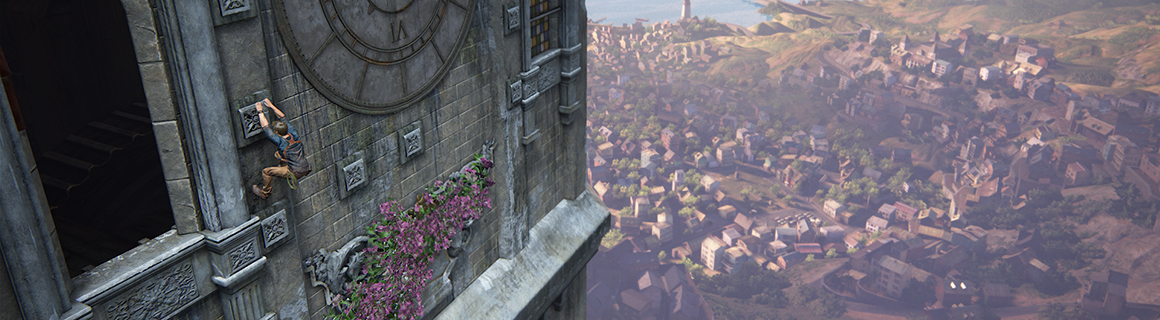
| Continuing my annual tradition, for as many great looking games as were out there this year, none looked as good to me as Uncharted 4: A Thief’s End. From the animation for all the characters to the remote locales that Drake explored, the game was simply gorgeous. Driving my jeep through the mud, boating on crystal clear waters, and climbing through overgrown jungles are all things we’ve seen in games before, but I don’t think any game has ever done them better. So, it may not have made my Top 5, but I needed to at least shine a small light on the beauty of this visual gem. |
 |
| The Michelle Obama Award for Battling Obesity Pokémon Go |
| Although strides have been made with motion controls and virtual reality, gaming has always been, and really remains, a pretty sedentary activity. Then Niantic released Pokémon Go this summer, and millions of people got up out of their chairs and started walking around—including yours truly. Heck, even to this day it affects my lunch habits, as I’ll walk places now in order to hatch eggs and get candy in the game. I met new people, found new places in and around Los Angeles, and spent more time outdoors than I had in a very long time. I’d still love to see battling and trading implemented at some point, but for now, kudos to Niantic for doing what almost nothing could for me for a long time: giving me a reason to get up and go outside. |
 |
| The “Reality Sucks, Let’s Go Somewhere Else” Award Robinson: The Journey |
| 2016 will be remembered as the year VR really hit mass-market, and so it seemed fitting to shine a light on one of the best games out there for it. While many games successfully brought the sensation of piloting mechs or planes to life, my favorite experience was when I got to explore a strange new world on foot. Robinson: The Journey revolves around a spacefaring boy lost on a strange planet filled with dinosaurs. Avoiding Velociraptors, T-Rexs, and Pterodactyls was invigorating, and got me using my PS VR headset probably more than any other game out there. This experience, more than any, other has sold me on the future of VR. |
EGM’s Best of 2016 Coverage
We’re taking a look at the best games of 2016 all week, from Christmas day through December 30th. Check back every day for our Top 25 Games of 2016, as well as our personal lists for the games we loved most this year. Check here for everything that’s been posted so far.
We’re taking a look at the best games of 2016 all week, from Christmas day through December 30th. Check back every day for our Top 25 Games of 2016, as well as our personal lists for the games we loved most this year. Check here for everything that’s been posted so far.
The third annual PlayStation Experience took place this past weekend, and this year was the biggest and best yet for Sony’s year-end celebration. More announcements than ever before were made at the show—but more than that, the show floor had more games than ever before, too. I was able to go hands-on with nearly two-dozen titles while at the show, and I’ve whittled those experiences down to the 10 best games that I think you should be chomping at the bit for.

| Developer: Metalhead Software Publisher: Metalhead Software |
Super Mega Baseball 2 |
The original Super Mega Baseball was the kind of arcade-y experience that baseball games started out as back in the day. Due to its initial December release back in 2014, it might not have gotten the love it deserved, but it was good enough to easily cement its status as a cult classic. Clearly, the love was heard loud and clear from the folks over at Metalhead Software, as they’re now working on a sequel planned for 2017. Super Mega Baseball 2 features more stadiums, more players, and more modes than the original, while still bringing over its 1-4 player couch co-op/versus play. Its controls remain easy to pick up but difficult to master, as your pitchers have every possible pitch imaginable, and knowing when to swing for power—and getting the timing right—or swing for contact is critical to success. If you love baseball, and are looking for an alternative to the more serious simulation that is The Show, Super Mega Baseball 2 is all set to knock it out of the park again.

| Developer: Yager Development Publisher: Grey Box |
Dreadnought |
We’ve been hearing about Dreadnought for a while now, and on the precipice of its 2017 release, we got the awesome news that it’s also coming to PlayStation 4. For those unfamiliar with the game, you take control of one of a series of massive starships, waging space war against those who would stand against you. Each ship has different statistics based on their size, speed, and armaments, and playing what best suits your style—and what can best help your team win—will be critical, as the planning stages are just as important here as the actual combat itself.
My one worry with the PS4 announcement was how the controls (based around a mouse/keyboard) would transition to a controller. Luckily, the team found a way to do it. The PS4 controller’s touchpad is utilized when choosing to divert extra power to shields, engines, or guns, picking up the slack of the lack of buttons on the controller face. And, after playing a couple matches this way, I found using a controller to be just as intuitive—if not more so—than the PC controls. Now, it’s just a matter of time before we can get access to the beta and become captains of our own starships.

| Developer: PlayTonic Games Publisher: Team17 |
Yooka-Laylee |
If you loved the original Banjo-Kazooie games, then Yooka-Laylee is not only a love letter and spiritual successor to them, but to all the platformers of the N64 era. During my PSX demo, I was introduced to a massive world chock full of collectibles, puzzles, and colorful characters that shared the British tongue-in-cheek, fourth-wall breaking humor that made us all smile a little wider back in the ‘90s. The single area I saw required Yooka and Laylee to change the seasons in order to collect every single Pagie they could as they try to save all the world’s literature from nefarious forces. Besides the seasonal puzzles, Yooka the chameleon can also eat special berries that changed his attributes. For example, one makes him turn to stone in order to withstand high winds, while another allows him to spit ice and freeze platforms. Laylee the bat also gets in on the action, shooting out a sonic scream that can wake up sleeping totems and reveal new platforms to hop across. Simply put, the gamut of gameplay on display here—from shooting to platforming to puzzle solving—made me feel like a kid again in all the best ways.

| Developer: Supergiant Games Publisher: Supergiant Games |
Pyre |
I love games. Always have, always will. Being a games journalist for nearly a decade now, however, means I love them differently. I appreciate them, but it’s rare I ever get outwardly excited anymore. There is an exception to every rule, of course, and I admit I absolutely mark out for anything Supergiant Games makes. So, when they officially announced that Pyre would have a local versus multiplayer mode at PSX (something we speculated when we first saw the game earlier in the year), and I got to play it? I went bonkers. And, it turned out, with good reason, because it seems Supergiant has taken the time and care they always apply to their worlds and their narratives, and have successfully done the same with multiplayer.
Much like the main game, Pyre’s multiplayer has two teams of three face off as you try to get a special orb into your opponent’s base—like a game of celestial basketball. The strategy and intensity that emerges from playing another human, however, takes the gameplay to an entirely new level. It’s difficult to predict these things, but I could easily see Pyre turning into a couch versus phenomenon. Supergiant told me at the show they’re trying to get online to work, but would rather no online than broken online. I think that’s entirely the way to go, because even as is, this game is primed to be a slam dunk.

| Developer: Sloclap Publisher: Devolver Digital |
Absolver |
Following E3 2016, I had heard from fellow EGMer Matt Buchholtz how amazing Absolver was. After finally getting to try it out at PSX, I don’t think Matt gave the game nearly enough credit. On the surface, Absolver is an arena fighter where your character moves through a world, taking on opponents, growing stronger, and learning new moves in the process. Dig just a little deeper, however, and you find a game that celebrates fighting as an art form, a complicated dance of fists and feet and force that when perfectly flowing together creates a performance unparalleled elsewhere. This is where Absolver makes itself special.
Its visuals are already beautiful; the character designs remind me fittingly a bit of the dancer from Bound. But when you start to understand the timing of moves, your fighter’s four different stances, how you can properly chain moves together, and even customize your own combos from dozens of moves, there’s a level of detail here rarely seen in any fighting game—and which has me equally excited for both the campaign and its versus modes.

| Developer: Whitemoon Dreams Publisher: Sony |
Starblood Arena |
When I saw Starblood Arena announced at the PSX 2016 showcase, the first thing that came to mind was how it would it compare to RIGS—another game involving players shooting each other while piloting mechs that was, to me, PlayStation VR’s best launch title. After playing it, Starblood Arena might be even better.
Right off the bat, Starblood Arena provides a cast of colorful characters and mechs of different shapes, sizes, and stats to differentiate itself from other early VR shooters (and inject some personality into the game). It also provides a full six axes of motion, meaning your mechs are constantly flying through the air and that threats can come from any angle. What Starblood Arena also does smartly is provide standard FPS controls with the two sticks on a controller, and then have finer aiming done by moving your head. This not only gives most gamers a control scheme they’ll be familiar with, but also reduces nausea-inducing situations down to nothing for most. Although I only took on bots in the limited demo—19:1 K/D by the way—the game features deathmatch and other standard shooter-fare modes. If Starblood Arena can build a solid player base, it could be the next great multiplayer game for PS VR.

| Developer: Lightbulb Club Publisher: Lightbulb Club |
Games of Glory |
The PS4 has been offering some interesting free-to-play fare recently, starting with the announcement that Gung Ho’s Let It Die was launching right there at PSX 2016 for everyone. Another F2P game that’s coming exclusively to the PS4 is Games of Glory, which could prove to be immensely popular among the multiplayer crowd. Combining MOBA elements with a Guardian mode, Games of Glory splits six players up into two three-person teams. Your team must attempt to win a best-of-9 series by holding the center of a map and keeping your designated captain alive for the entirely of a round. Who fills the role of captain always rotates between rounds, so every player could potentially be the captain three times. Each character has moves and roles similar to what you would see in your typical MOBA, including tanks, DPS, healers, and so on. Coming up with a strategy and combination of players to overcome your opponents isn’t easy, but it sure can be fun. Although only a few characters and only the one mode were available for play at PSX, some variety here could easily see Games of Glory catch on with its ease of play.

| Developer: Giant Sparrow Publisher: Sony |
What Remains of Edith Finch |
I saw What Remains of Edith Finch a couple of years ago at E3, and have been waiting to find out the final, sordid history of the Finch family tree with bated breath ever since. Players are tasked with exploring the Finch family home, where whenever someone in the family meets with a tragic end, their bedroom is sealed off. By discovering new rooms, you also discover new tragedies and tales as you try to uncover the secret of the Finch legacy. With a release finally coming supposedly right around the corner, I played through one of the shorter stories on the tree, that of a twin brother who wanted to fly in the worst way—and got his wish.
What Remains of Edith Finch is the next step in interactive storytelling, providing players with fantastical experiences that also find ways to tug on heartstrings. The two stories I played through on two separate occasions took me places I never thought games might go, but when the game is finally done and we play through this entire collection of short tales, I think we’ll all be happy they did.

| Developer: Prideful Sloth Publisher: Prideful Sloth |
Yonder: The Cloud Chaser Chronicles |
Imagine a Legend of Zelda game minus the enemies, and you’ll have a pretty rough idea of what to expect from Yonder: The Cloud Chaser Chronicles. Here, you play a boy or girl who, after waking up in a mysterious world, sets out both to figure out how they got there and help purge a mysterious force that is consuming the land. To do that, you’ll have to find fairy-like creatures on your journey that can help you purge the encroaching darkness. Along the way, you’ll also be able to build your own farm, befriend a variety of animals, collect resources, or go on quests for nearby villagers to earn the tools needed to open up more of the world. You can fish, chop wood, mine stone, and more to gather resources, which—when combined with your farming aspect—gives the game a bit of an open-world Harvest Moon feel as well. I admit, normally I prefer a bit more conflict in games of this ilk, but I’m curious as to where the story could go. As a change of pace, the peaceful open-world quests of Yonder might be just what we need as gamers.

| Developer: Exploding Tuba Publisher: Exploding Tuba |
Divide |
The twin-stick shooter is a pretty common video game staple; rarely has it ever been tied to a complex narrative, however. Enter: Divide. It’s a science-fiction action/adventure game that will demand every second of your attention. Every bit of information needs to be taken with a grain of salt as you work your way through a futuristic dystopia in search of your missing daughter.
What makes Divide even more interesting is its control scheme, which uses none of the PS4 controller’s face buttons. Instead, everything is mapped to triggers and the control sticks. Whether hacking a terminal to open a door, or aiming down the sights of your gun when in confrontations with soldiers or security bots, you’ll have to master this simple control scheme to work your way out of some complex jams as you dive deeper into the story. Much like the story itself, Divide may look simple at first glance, but when you start to get past the surface, there is so much more to discover.
Another roster update from EA Canada came down just in time for the holiday season and saw the most changes yet for players in NHL 17. Here are some of the most interesting numbers after this late December patch.
Rookie sensation Auston Matthews of the Toronto Maple Leafs saw a one-point bump up to an 86 overall, and Edmonton Oilers superstar Connor McDavid got a four-point bump up to an 92 after helping lead Edmonton to a comfortable position right now in third-place in the Pacific Division. Vancouver Canucks rookie defenseman Troy Stecher saw the biggest change in stats, though, going from a 72 overall to an 80 overall, a full eight-point boost in this patch. Stecher has 10 points in 29 games this season and notched his first career goal back on November 13th against the Dallas Stars. He’s seen a steady increase in ice time and all of these factors have led to a higher ranking.
On the other side of the puck, Auston Matthews’ boost up in Toronto was counteracted by defenseman Roman Polak’s slashing of his rating from an 85 to an 81, by far the biggest drop of any player hit with a negative to their rating this go around.
In terms of overall changes, the Arizona Coyotes, Boston Bruins, Columbus Blue Jackets, Toronto Maple Leafs, and Winnipeg Jets saw the most players have changes with seven each. After seeing Columbus’s 16-game winning streak and Toronto’s terrific Centennial Classic play, it’s no wonder these teams got a lot of boosts spread around. The Buffalo Sabers, Dallas Stars, Ottawa Senators, and San Jose Sharks saw the least changes of teams that had changes, with only two players being adjusted, included both Sharks and Senators players receiving only negative changes.
Overall, this update saw 122 players having their numbers adjusted, with 66 (54.1%) of those players getting a positive boost. The St. Louis Blues were the only team not to have a single player’s stats change, but we expect that to change in the next update after an epic 4-1 victory in the Winter Classic at Busch Stadium. If you’re curious to see how specific teams have changed before you head online with your favorite squad, check out the link.
And speaking of playing online, be sure to tune in every Tuesday at 9 PM ET/6 PM PT for more of Hockey Achievements’ Tuesday Night Hockey. Our own play-by-play savant Ray Carsillo takes on all comers in both head-to-head and EASHL matchups. Winners will receive 2000 points that can be put towards pucks here at Hockey Achievements, and everyone gets 500 just for participating. If you’d rather just watch, stay tuned to Hockey Achievements or twitch.tv/hockeyachievements.
I was cast in a new animated web series called Film Quest. Here is the first episode. I play Dave the Raider, and contribute some background voices, too.
I do a weekly NHL 17 Twitch stream on Tuesday nights (9PM ET/6 PM PT) for a website called HockeyAchievements.com. Here is one of the highlights from Tuesday, November 15, 2016.
 RayCarsilloWrites.com